
New simulations show dolphins generate speed through large, controlled vortex rings, not through turbulence.
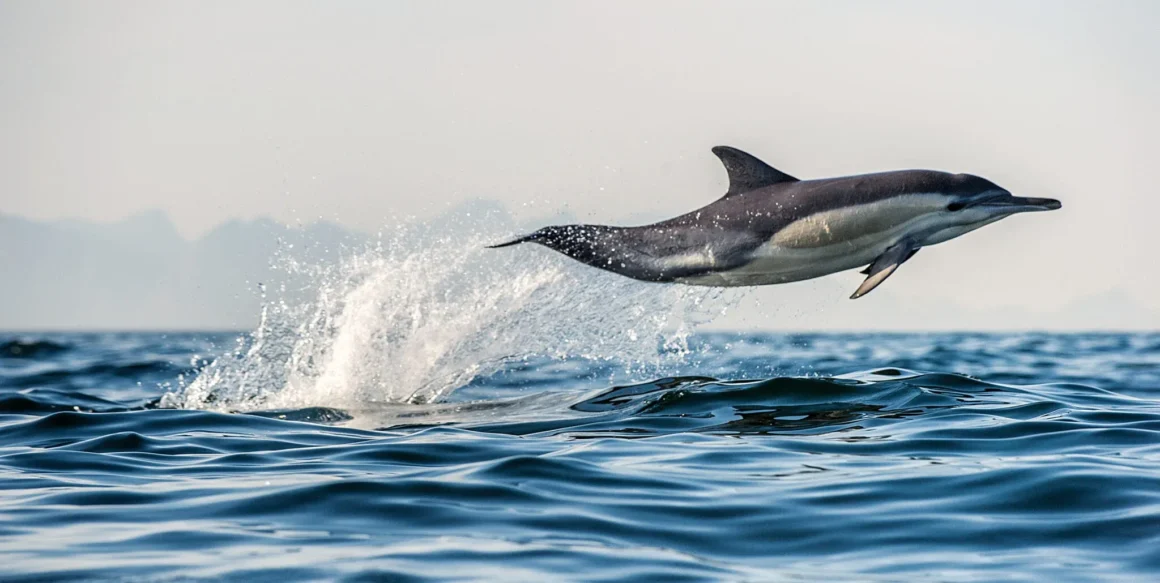
Dolphin vortex rings now offer a clearer view of how dolphins gain speed in water. The shift is straightforward: speed doesn’t come from disturbing more water, it comes from directing it into a structured flow.
Research led by Yutaro Motoori at Osaka University examined this motion through detailed simulations. The work ran on Japan’s Fugaku supercomputer, and the system tracks water behavior with high precision.
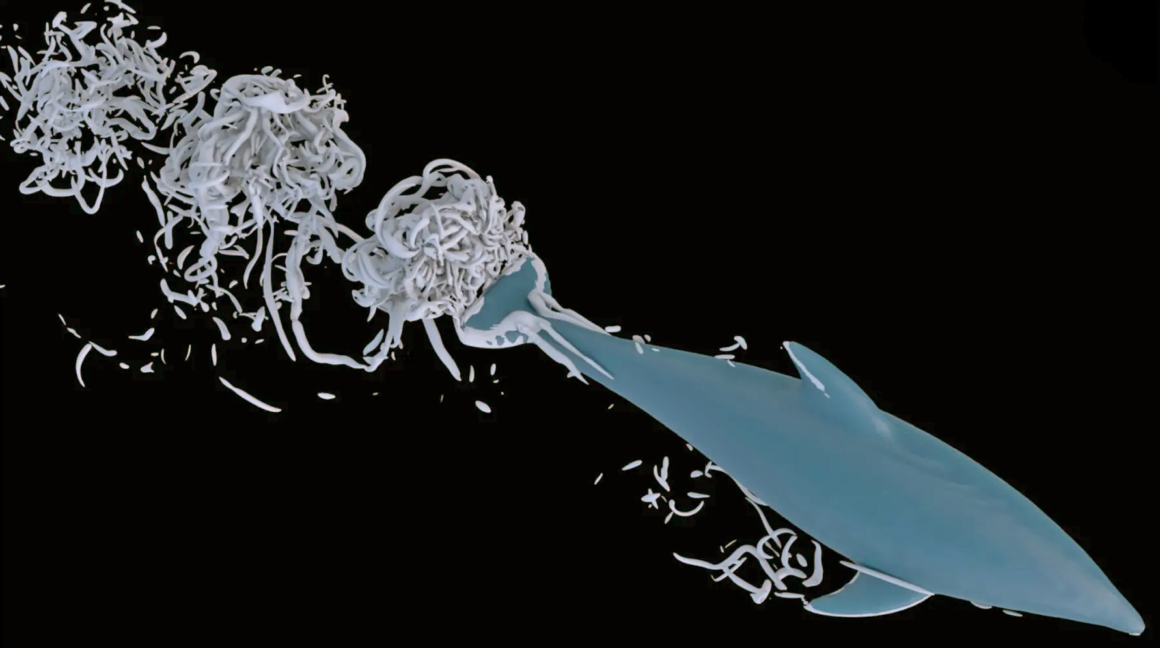
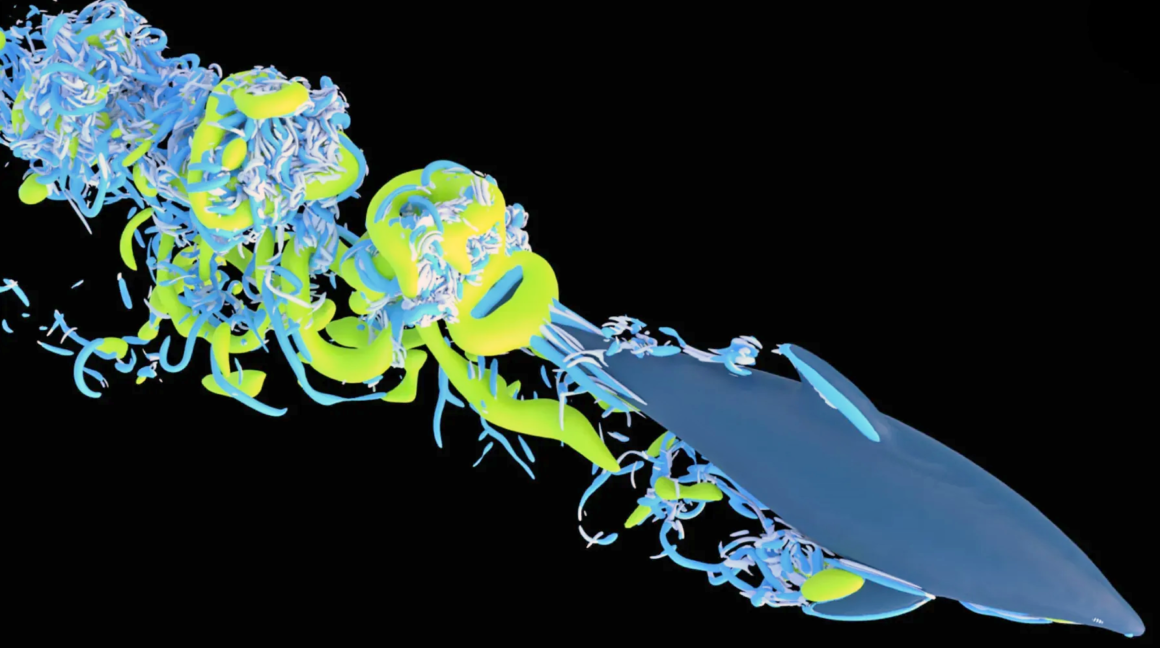
European Journal of Mechanics – B/Fluids
The result is clear. As a result, forward motion is driven by large vortex rings created by the tail. As these rings form and move backward, the dolphin gains thrust in the opposite direction. Smaller swirls appear as a byproduct of this process. However, they don’t play a meaningful role in speed.
Each downward tail movement organizes the surrounding water into a ring-shaped structure. Once formed, that structure detaches and carries momentum away from the body.
What matters here isn’t volume, it’s structure. Larger rings generate stronger thrust, while smaller eddies remain part of the dissipating flow.
Dolphin vortex rings change how speed works
Fast swimming has long been associated with turbulence. More motion, more mixing, more speed.
Instead, this study narrows that assumption. Efficiency comes from controlled flow, not intensity. The strongest thrust comes from well-timed, well-formed vortex rings.
It makes the mechanics of speed clearer. Not how much water is disturbed, but how that motion is organized.
Same energy, more distance
The finding carries directly into engineering. Many underwater systems still lose energy through inefficient flow patterns.
As a result, the dolphin model points in a different direction. Instead of increasing motion, it focuses on producing stronger, more controlled flow structures.
That shift makes it possible to move farther using the same amount of energy.
A simpler model of movement
The model outlines a clear sequence:
tail motion → large vortex rings → backward water → forward movement
Not every part of the wake contributes equally. The main thrust comes from the largest and most organized structures.
The model doesn’t capture every aspect of a real dolphin. But it clarifies how the system produces motion in water.
One clear difference
Dolphins don’t speed up by stirring water.
They speed up by shaping it.
➡️ This kind of science clarity shows up on Poziwibe in Nature.
