
The Fondation Jérôme Seydoux–Pathé building in Paris is one of the city’s most quietly surprising architectural spaces. From the street, it appears as a preserved façade, but behind it, an entirely different structure unfolds — designed by Pritzker Prize–winning architect Renzo Piano.
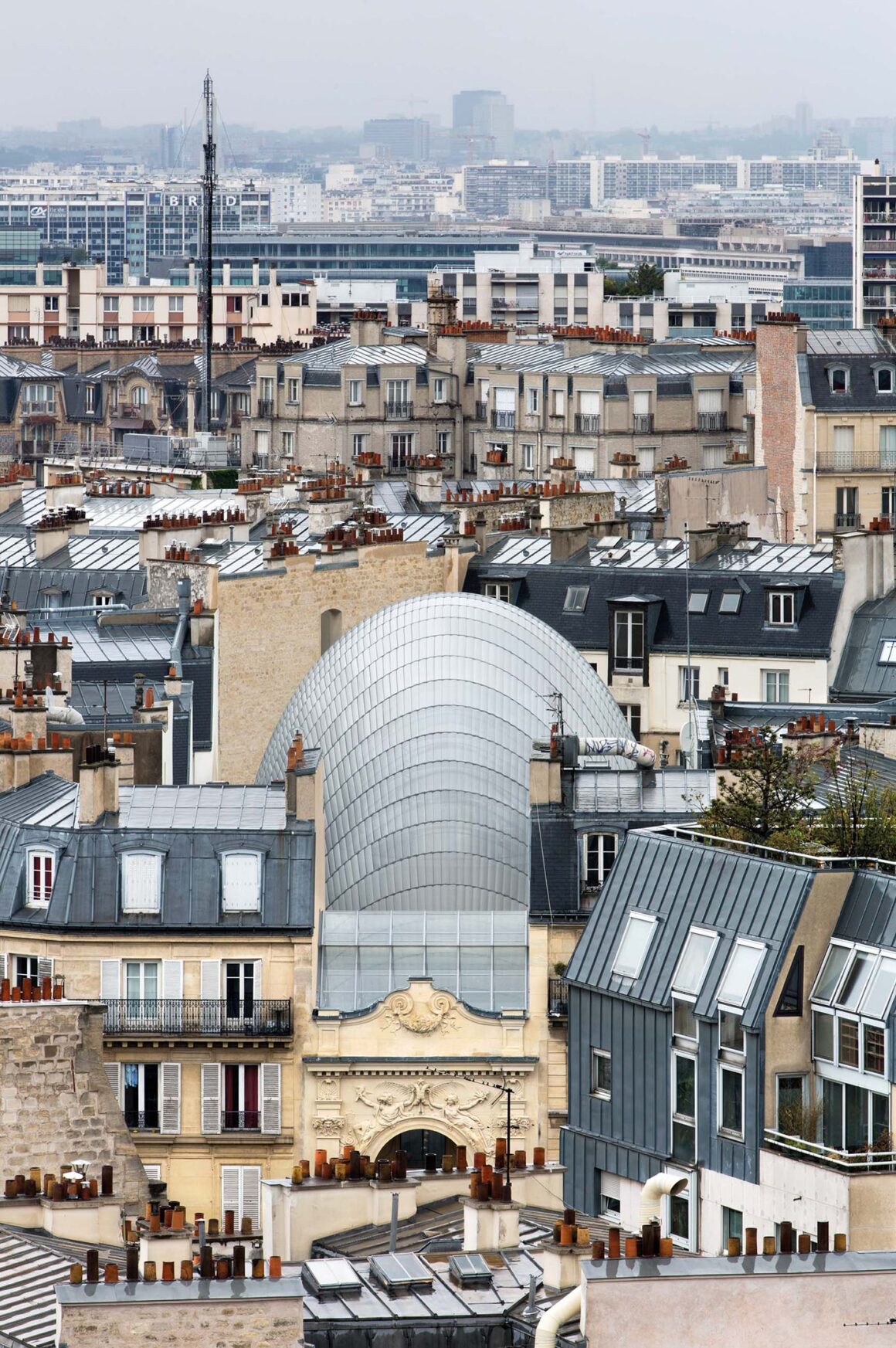
Fondation Jérôme Seydoux–Pathé building design approach
At first glance, the building blends into its surroundings. The original Parisian façade remains intact, maintaining the rhythm of the street and preserving its historical continuity.
But once inside, the experience shifts.
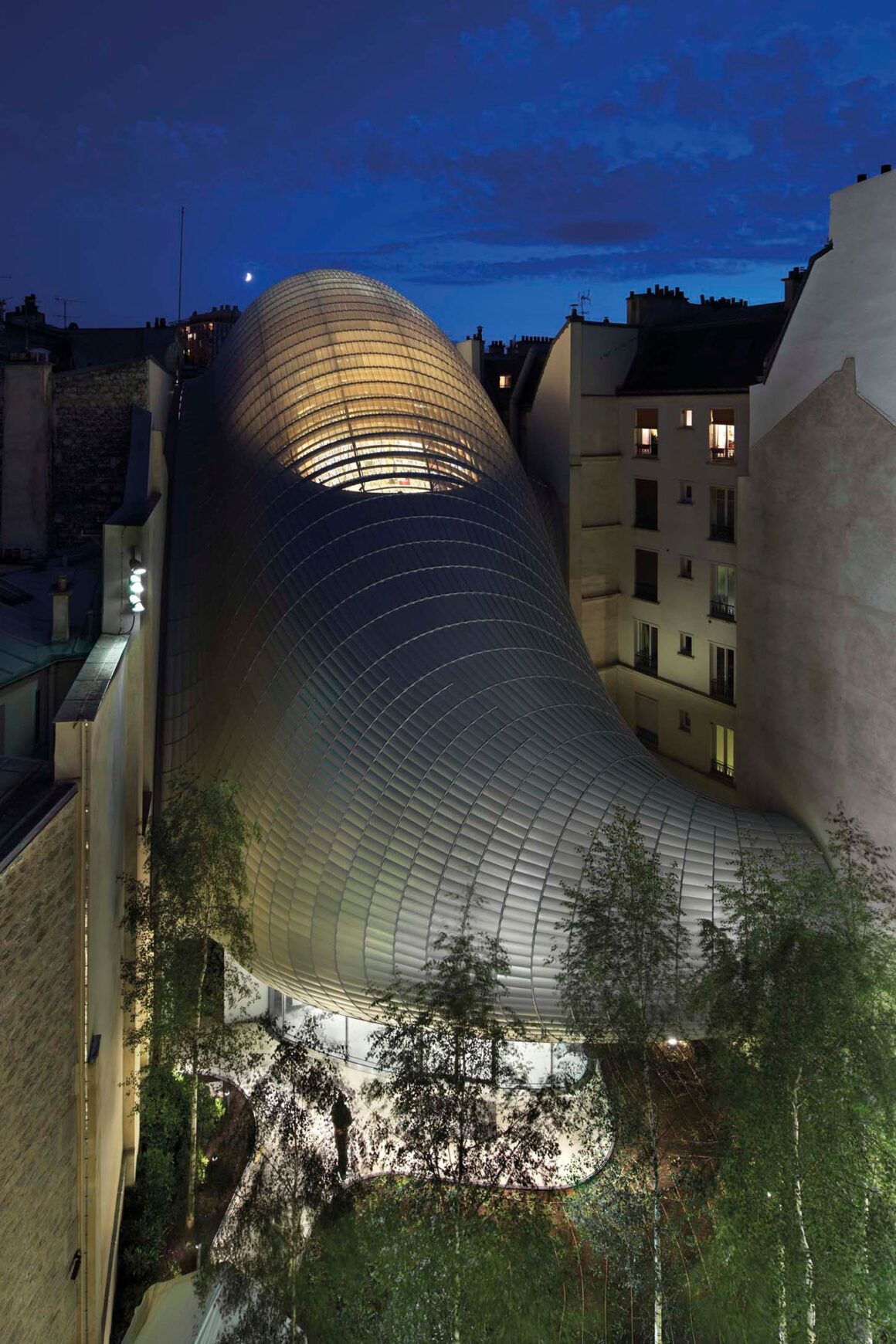
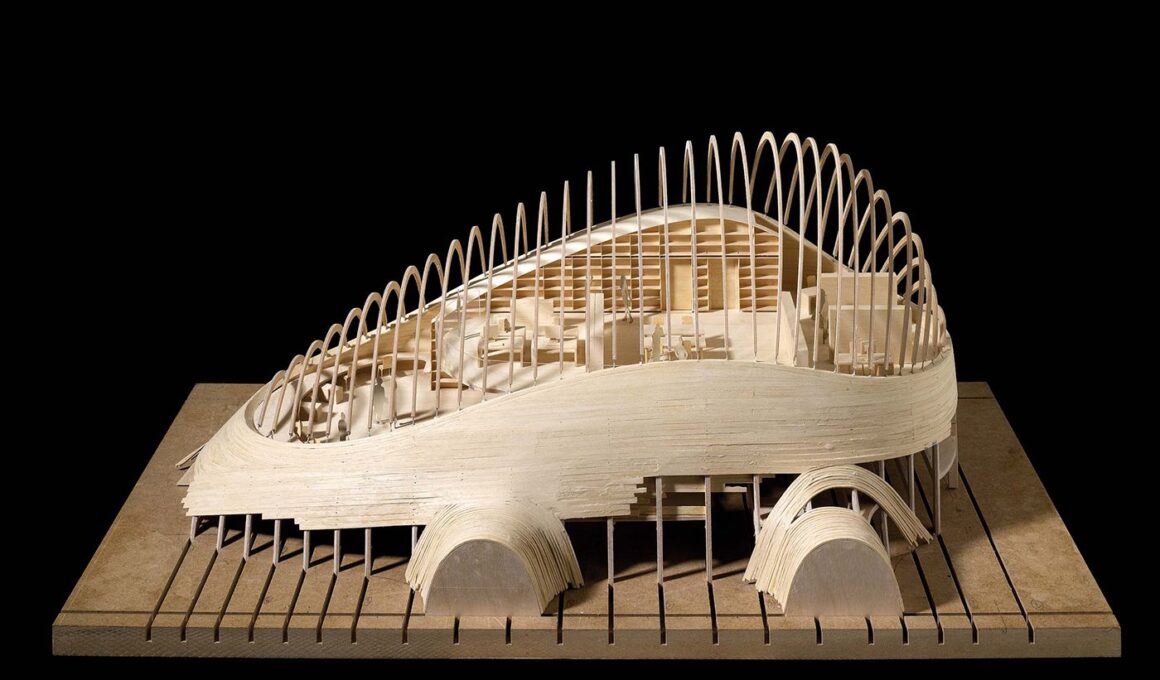
Designed by Renzo Piano Building Workshop, the project reveals a curved, organic structure rising from the courtyard. Its outer skin is formed by perforated aluminum elements, creating a soft texture that subtly interacts with light throughout the day.
The contrast is deliberate — history in the front, innovation quietly placed behind it.
A space shaped by cinema memory
A space shaped by cinema memory
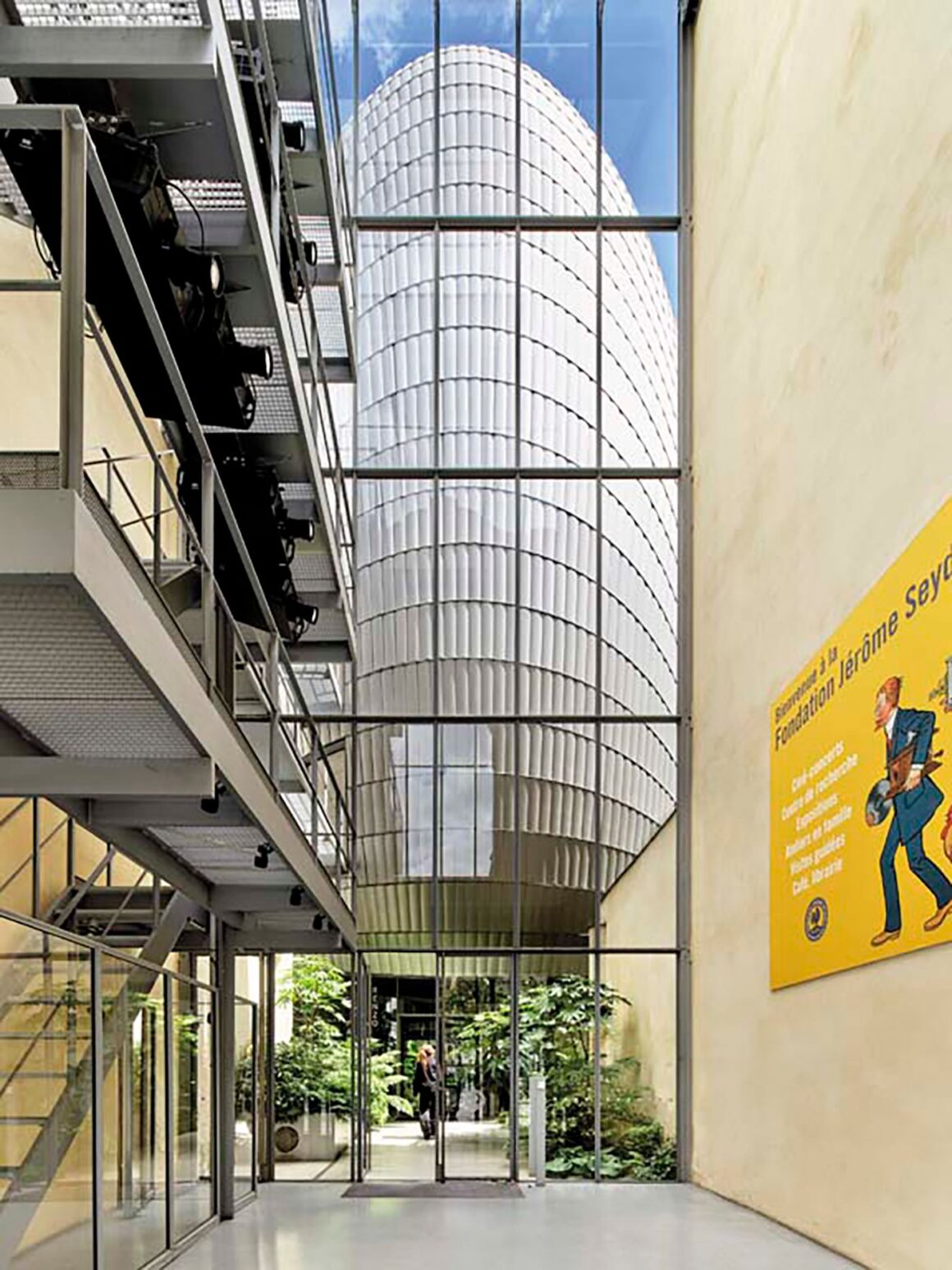
The building is dedicated to preserving film history, and its interior reflects that purpose with clarity.
The structure is organized vertically:
- Lower levels house archives in carefully controlled conditions
- Middle floors present exhibitions to the public
- A small screening room offers an intimate viewing experience
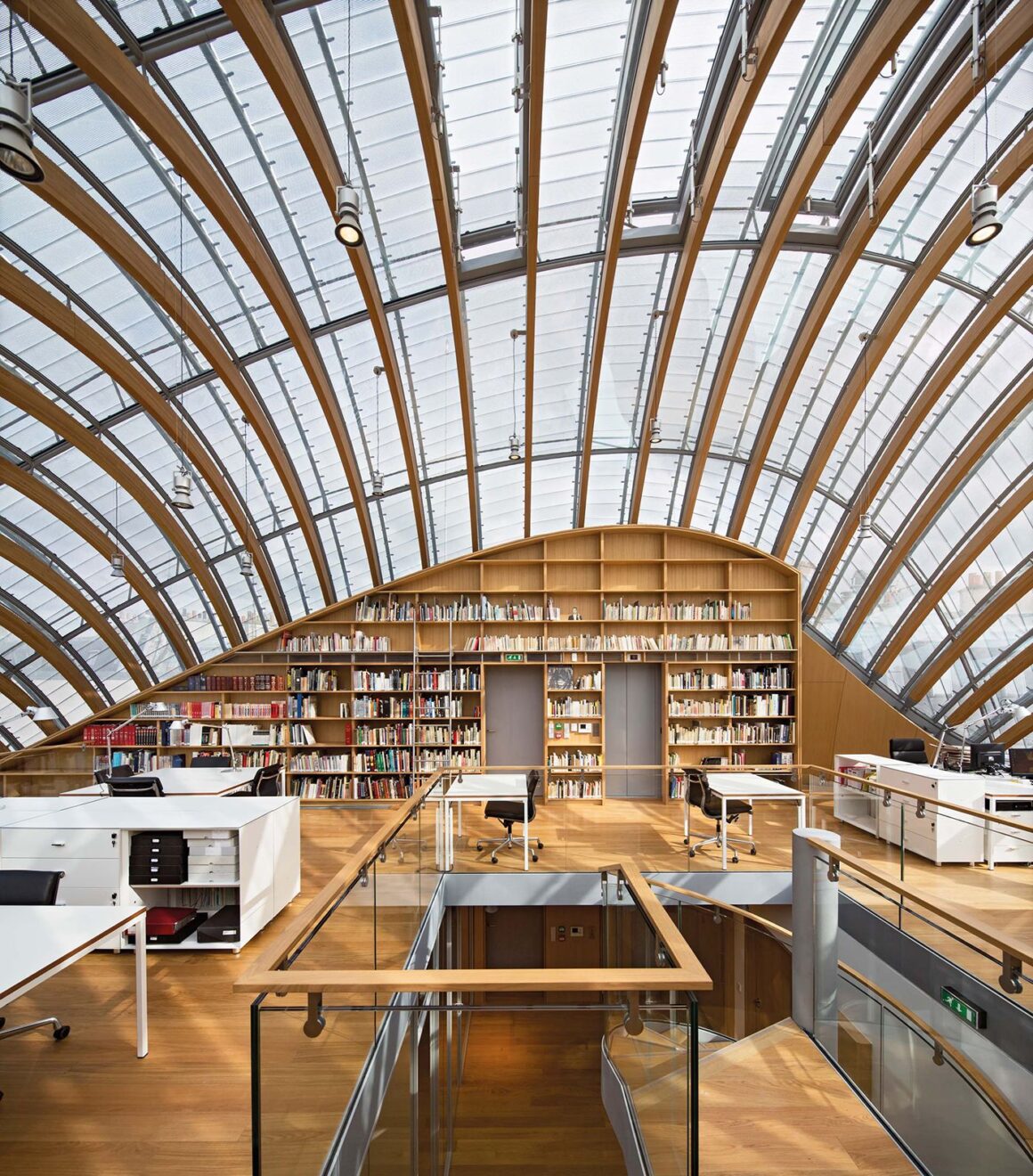
- Upper levels provide naturally lit office spaces
This progression — from enclosed, darker spaces to open, light-filled areas — mirrors the transition from preservation to creation.
Renzo Piano’s quiet signature
Renzo Piano’s architecture is often defined by restraint rather than spectacle.
That approach is evident here.
Instead of dominating the urban block, the building steps back. It preserves the existing façade, adapts to a tight site, and allows natural light to reach neighboring buildings. The curved form doesn’t compete with Paris — it aligns with it.
It’s a design that prioritizes balance over attention.
Why it quietly matters
In a city shaped by strong visual identity, bold architecture often stands out immediately.
This one doesn’t.
The project offers a different idea of innovation — one that integrates rather than disrupts. It demonstrates how contemporary architecture can coexist with history without losing its voice.
Like cinema, the building reveals itself in layers.
And its impact comes from what it holds back, not what it immediately shows.
➡️ Explore more thoughtfully designed spaces in our Lifestyle section.

