
La Plata city design is one of the clearest examples of a place imagined before it was fully lived in.
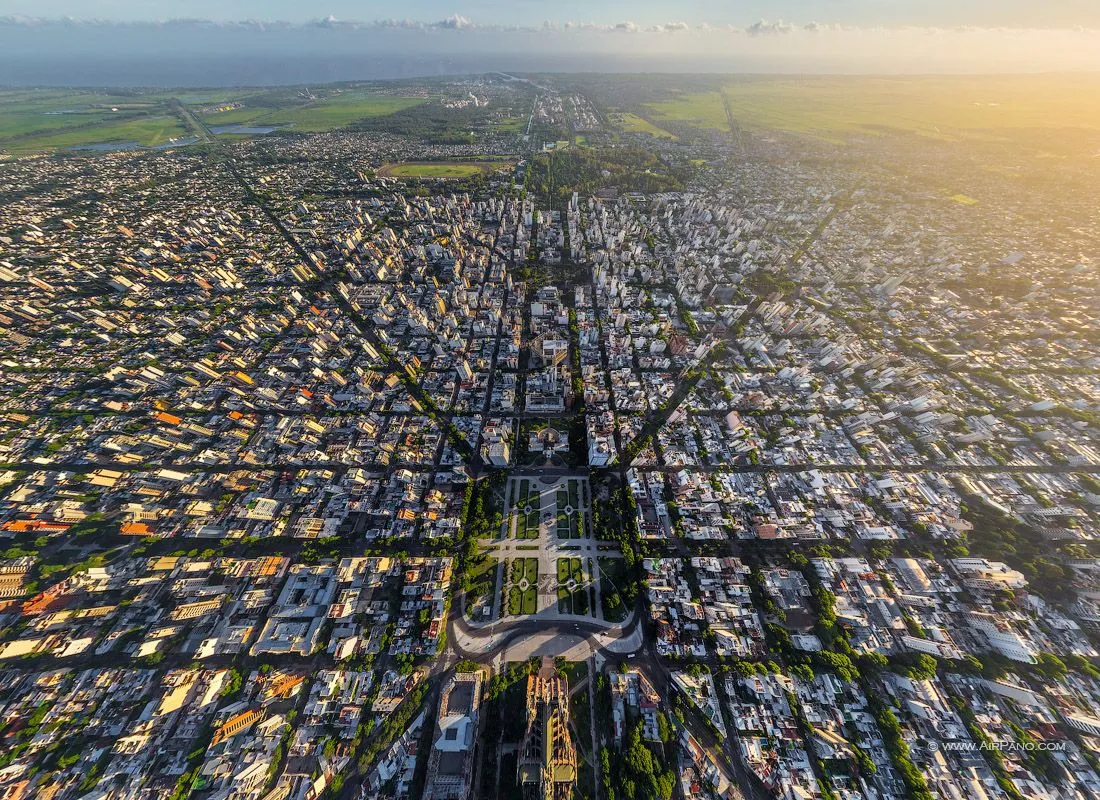
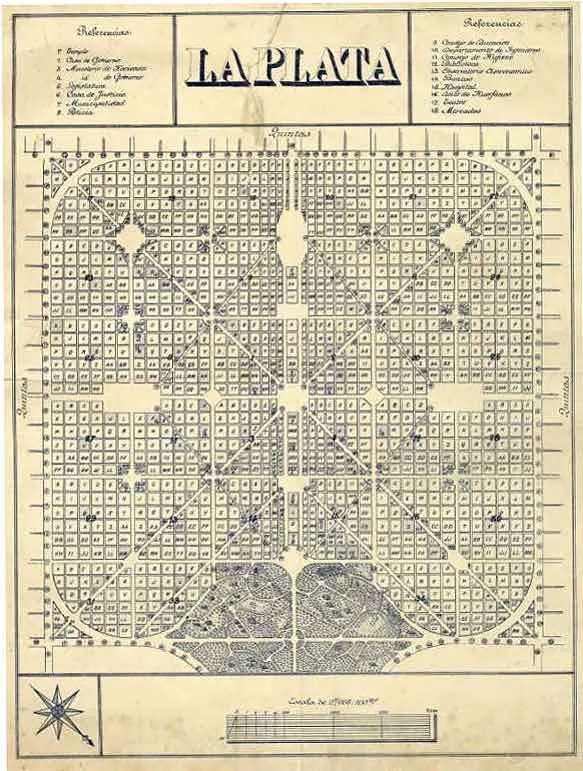
Founded in 1882 as the new capital of Buenos Aires Province, the city was planned by Pedro Benoit around a system that feels both strict and surprisingly fluid.
At first glance, it looks simple: a grid. But the story is not the grid.
It’s what cuts through it.
Why La Plata Became the “City of Diagonals”
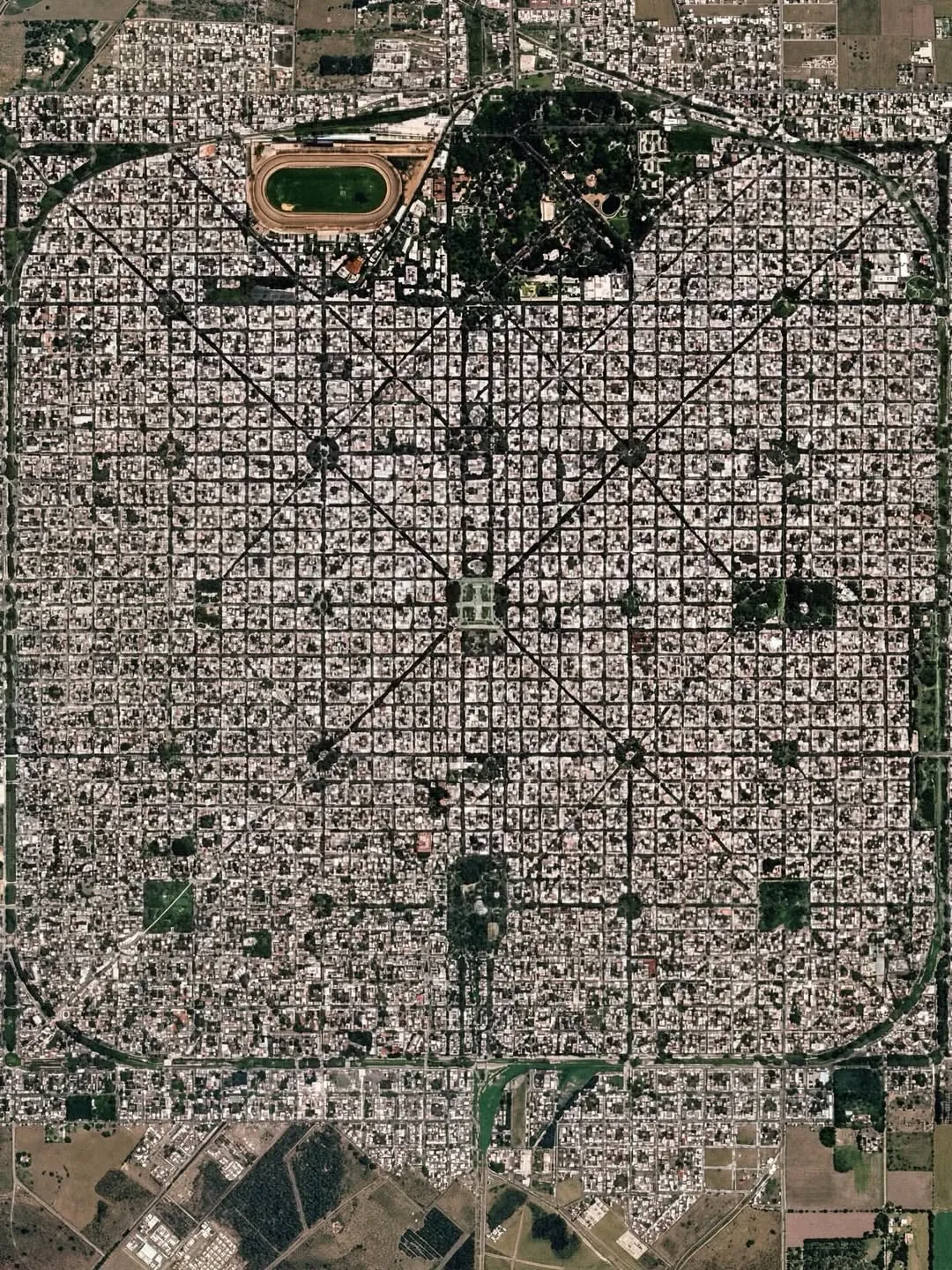
Instead of relying only on straight lines, La Plata introduced diagonal avenues that slice across the grid.
The intention was practical.
Shorter routes. Faster movement. Better connections.
But the effect goes beyond efficiency.
Those diagonals reshape how the city feels. Movement becomes less rigid. Distances feel closer. The grid stops being repetitive and starts becoming readable.
That is why the nickname “City of Diagonals” is not just descriptive.
It reflects how the city actually works.


A System That Repeats with Purpose
The plan follows a rule that quietly defines everyday life.
Every six blocks, there is a plaza.
Not randomly placed. Not decorative.
Systematic.
This creates a rhythm across the city. Instead of one central green space, La Plata distributes breathing room evenly. Public space is not something you travel to — it’s something you encounter.
At the center of it all sits Plaza Moreno, anchoring the entire layout with a clear civic focus.
More Than a Plan on Paper
La Plata was not built to be visually interesting. It was built to solve a problem.
After Buenos Aires became the national capital, the province needed a new administrative center. The city was created from scratch, and its design reflects that intention: clarity, order, accessibility.
But what makes La Plata different is that the plan did not remain theoretical.
It held.
The grid still guides orientation.
The diagonals still shape movement.
The plazas still define space.
Why La Plata Still Feels Relevant
La Plata city design matters today because it shows something simple but often forgotten.
Cities don’t have to grow into chaos.
With clear rules — and the discipline to follow them — a city can stay readable, navigable, and human.
La Plata is not just a planned city.
It is a reminder that structure, when done right, can feel like freedom.
➡️ You can explore more stories like this in our Lifestyle section.

