
The New Museum reopening marks more than a return for one of New York’s most recognizable contemporary art institutions. It introduces a major architectural expansion that reshapes how the museum connects with the city around it.
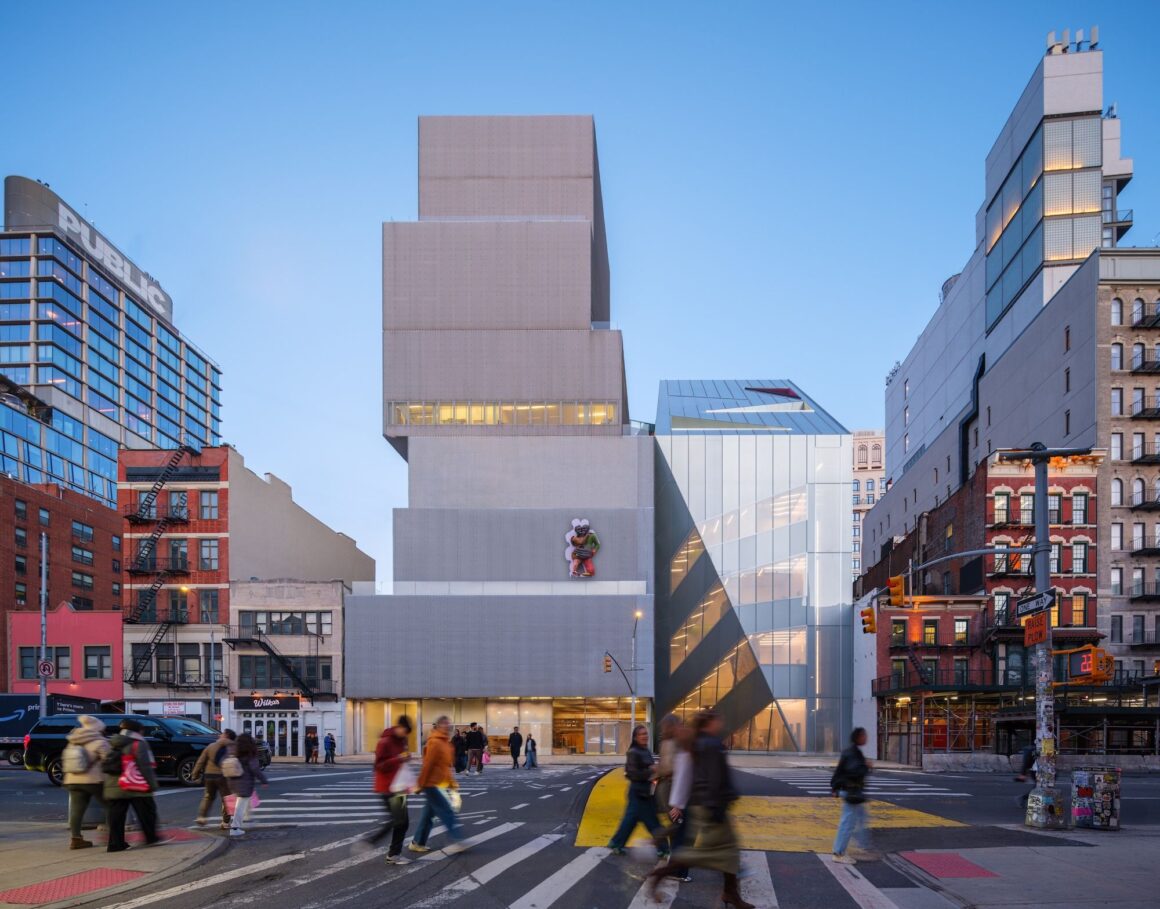
Reopened on March 21, 2026, the Bowery-based museum now includes a new OMA-designed building alongside its original SANAA-designed structure at 235 Bowery. Together, the expansion brings the institution to roughly 120,000 square feet, nearly doubling its previous size and allowing for a broader range of exhibitions, programs, and public use.
New Museum Reopening Expands Public Space
What makes the New Museum reopening especially notable is not just the added space, but the shift in how that space is used. The new building introduces flexible interiors, visible circulation, and an outdoor plaza at the intersection of Bowery and Prince Street.
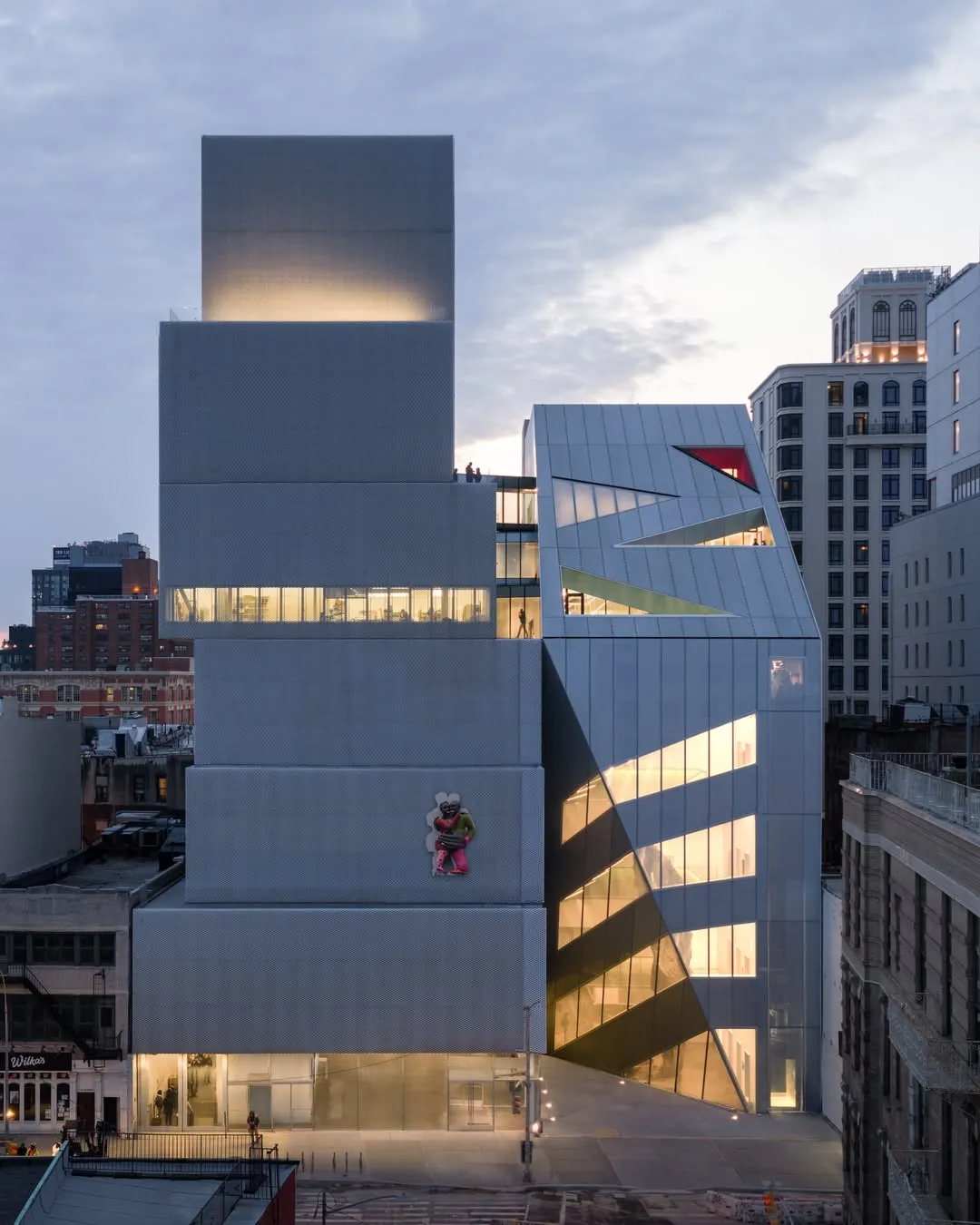
These elements turn the museum into a more open and accessible environment — one that encourages visitors to engage beyond traditional exhibitions. The plaza, in particular, acts as a threshold between the institution and the city, inviting passersby to step in rather than observe from a distance.
This reflects a broader evolution in cultural spaces. Museums are no longer defined only by what they display, but by how they host public life.
A Dialogue Between OMA and SANAA
The original New Museum building, designed by SANAA and opened in 2007, is known for its stacked, sculptural form. The new addition by OMA, led by Shohei Shigematsu, does not replicate that design. Instead, it complements it.


The expansion creates a clear architectural dialogue while maintaining a unified identity. Its façade reveals movement inside, making the museum feel more transparent and connected to the street. Internally, both buildings function as a continuous experience rather than separate structures.
Why the New Museum Reopening Matters
The New Museum reopening arrives at a time when cultural institutions are being redefined. Visitors increasingly expect spaces that offer interaction, community, and flexibility — not just curated exhibitions.
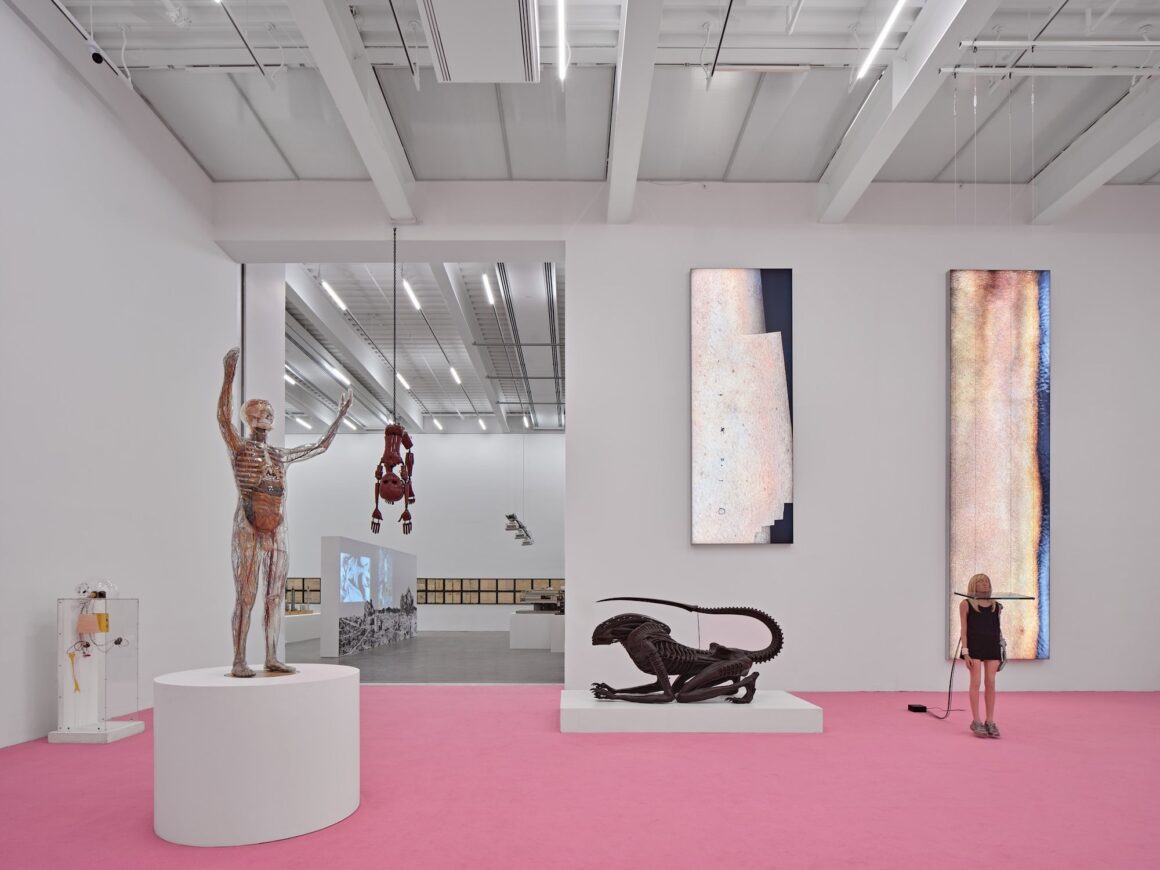
This expansion responds directly to that expectation. It creates room for art, but also for conversation, education, and informal gathering. The result is a museum that feels less like a closed institution and more like an active part of the city.
In that sense, the project reflects a larger idea: architecture is not only about buildings, but about how people meet, move, and experience culture together.
The New Museum has reopened with more than additional square footage. It has reopened with a clearer vision of what a museum can be in a living, evolving city.
➡️ Explore more architecture, design, and urban stories shaping modern culture with Poziwibe’s Lifestyle coverage.

