
At first glance, it looks like a mirage — endless white sand dunes stretching under a bright sky, interrupted by pools of clear, blue-green water. But in northern Brazil, this landscape is entirely real. Known as Lençóis Maranhenses, it’s one of the rare places on Earth where a desert-like environment fills with freshwater lagoons, creating a setting that feels almost unreal.
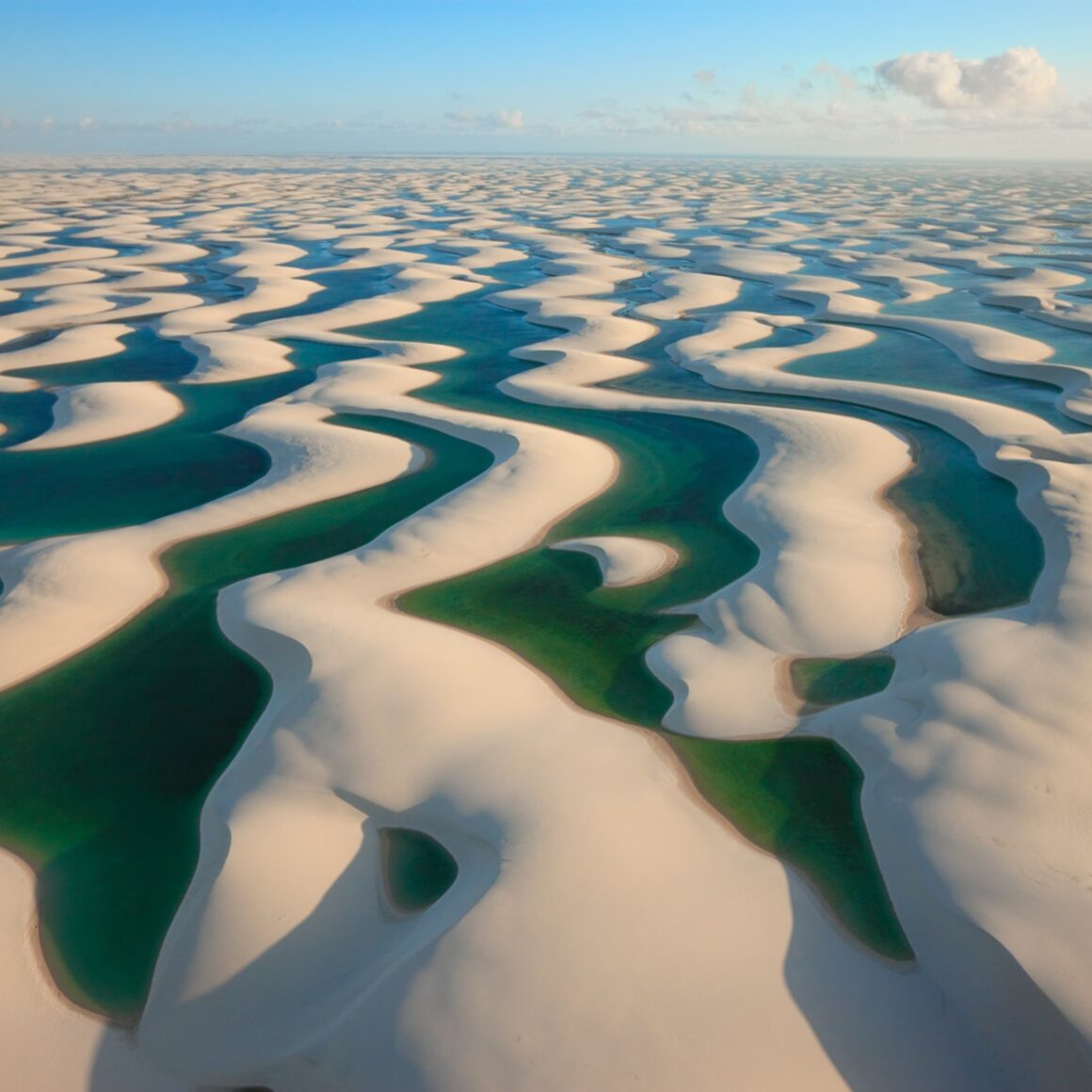
Located in Maranhão state, Lençóis Maranhenses National Park challenges what we typically expect from a desert. Despite its sweeping dunes, the region receives significant rainfall each year. Instead of disappearing into the sand, the rainwater collects between the dunes, forming thousands of temporary lagoons that transform the landscape into a shifting mosaic of water and sand.
A Desert That Holds Water
Unlike traditional deserts, Lençóis Maranhenses sits on a unique geological foundation. Beneath the dunes lies an impermeable layer of rock, which prevents rainwater from draining away. During the rainy season — typically between January and June — these basins begin to fill, reaching their peak between June and September.
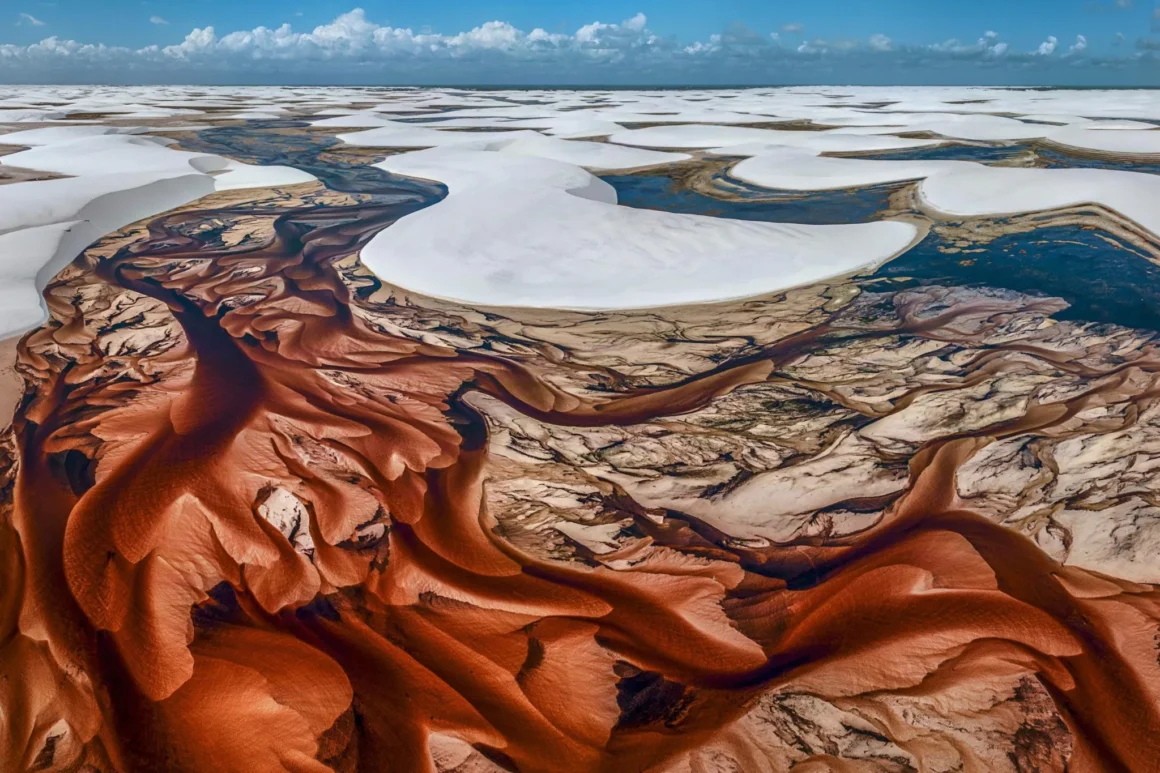
The result is a landscape that constantly evolves. Lagoons appear, expand, and eventually evaporate as the dry season returns. Some last for months, while others vanish more quickly, making each visit slightly different from the last.
What makes the experience even more distinctive is how accessible it is. Visitors can walk barefoot across the soft sand, moving from dune to lagoon without the need for specialized equipment. The water is fresh, clear, and often warm — inviting rather than harsh.
Walking Through a Living Landscape
Exploring Lençóis Maranhenses is less about reaching a destination and more about moving through a living environment. The dunes shift with the wind, subtly reshaping paths and perspectives. What appears flat from a distance reveals depth and texture up close.
Despite its seemingly harsh conditions, the region also supports pockets of life. During the wet season, fish appear in some lagoons — an occurrence that has long intrigued scientists. Their presence is linked to dormant eggs that survive the dry months, waiting for water to return.
Local communities, particularly in nearby towns like Barreirinhas and Atins, have adapted to this rhythm. Tourism has grown steadily, but the experience remains grounded in nature rather than spectacle.
Why It Matters
Lençóis Maranhenses stands as a reminder that landscapes don’t always fit into simple categories. It blurs the line between desert and wetland, showing how ecosystems can exist in unexpected balance.
In a time when many natural environments are becoming more predictable —or more fragile— this place offers a different perspective. It highlights how variation, even within extremes, can create something both resilient and visually striking.
It also reflects a broader shift in how people travel. Experiences like this are less about landmarks and more about immersion — being present in a place that feels unlike anywhere else.
A Landscape That Doesn’t Stay the Same
Perhaps the most compelling aspect of Lençóis Maranhenses is its impermanence. The lagoons that define it are temporary, shaped by cycles that can’t be controlled or replicated.


That fleeting quality is part of its identity. It means the landscape is never exactly the same twice — and that each visit captures a moment in a constantly changing environment.
In that sense, Lençóis Maranhenses is not just a destination. It’s a reminder that some of the most memorable places are the ones that refuse to stay still.
➡️ You can explore more stories like this in our Nature section.

