
The new Leo Messi Stand at Nu Stadium feels unusual for one clear reason: clubs usually honor legends after the era ends, not while the player is still shaping the place in real time.
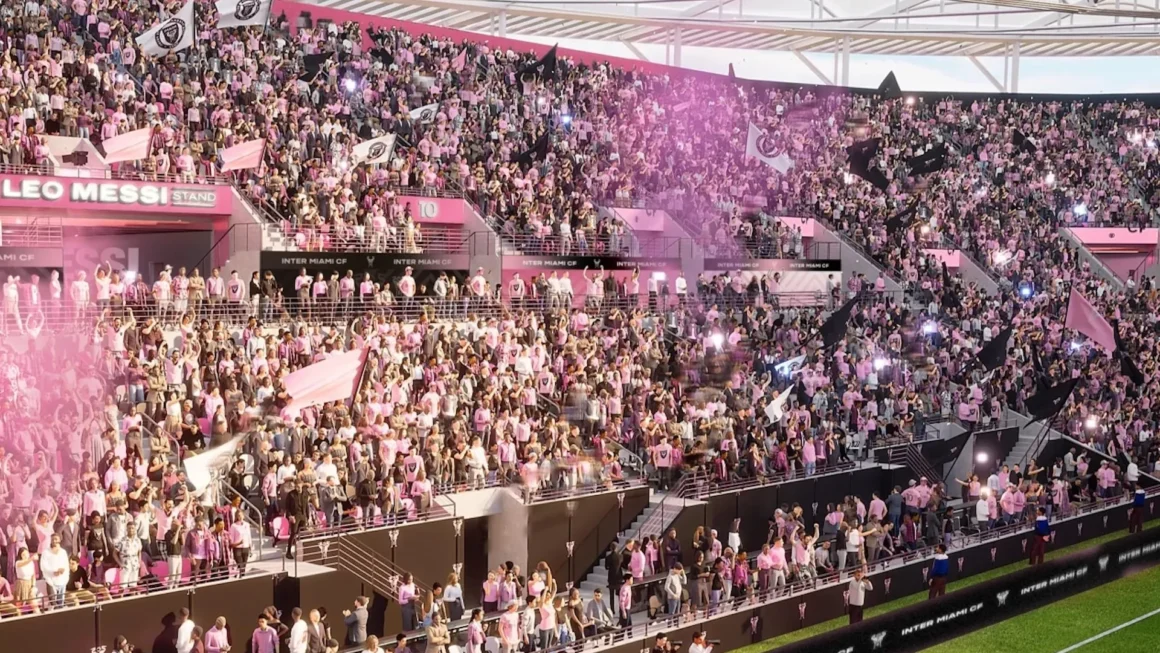
Credit: Inter Miami CF
Most stadium tributes arrive with a backward glance. Inter Miami chose the opposite. On March 27, the club unveiled the Leo Messi Stand at Nu Stadium, dedicating the east-side seating block of its new home to a player who is still central to the club’s identity. The stand spans sections 117–121 in the lower bowl and 217–223 in the upper bowl, and both Inter Miami and MLS framed it as a rare case in global sports: an athlete actively playing at his home stadium while already having a stand named after him. You can read the official club announcement and Inter Miami’s Nu Stadium guide for the club’s own framing of the moment.
A tribute written in the present tense
That is what makes this story bigger than a naming decision. Messi did not simply arrive as a brand magnet. Since joining Inter Miami in July 2023, he has helped drive the club to the 2023 Leagues Cup, the 2024 Supporters’ Shield, and the 2025 MLS Cup. He also became the first player in league history to win the Landon Donovan MLS MVP award in consecutive seasons, while adding the 2025 MLS Golden Boot with 29 goals. The stand is not rewarding memory alone. It is rewarding momentum.
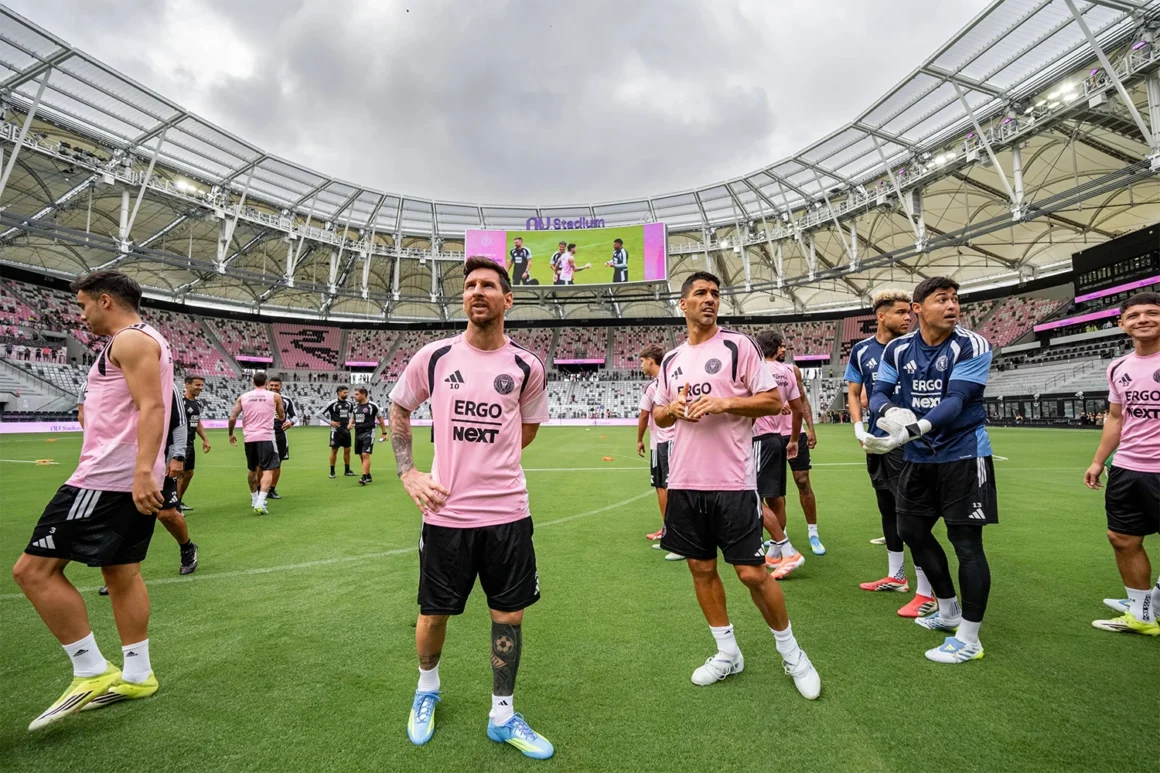
Why the Leo Messi Stand at Nu Stadium hits differently
Context matters here too. Nu Stadium is not just a new soccer venue. Inter Miami says the 26,700-seat stadium sits at the center of Miami Freedom Park, a much larger sports and entertainment district that includes retail, dining, office space, hotel rooms, civic plazas, youth fields, and a 58-acre public park. In that setting, naming a stand after Messi feels less like ceremonial branding and more like architectural identity. Inter Miami is not only selling tickets. It is building its new home around the player who made the club globally legible. For a league that still thinks hard about symbolism, scale, and international reach, that is a meaningful move.
Then the stadium opened, and the symbolism got louder
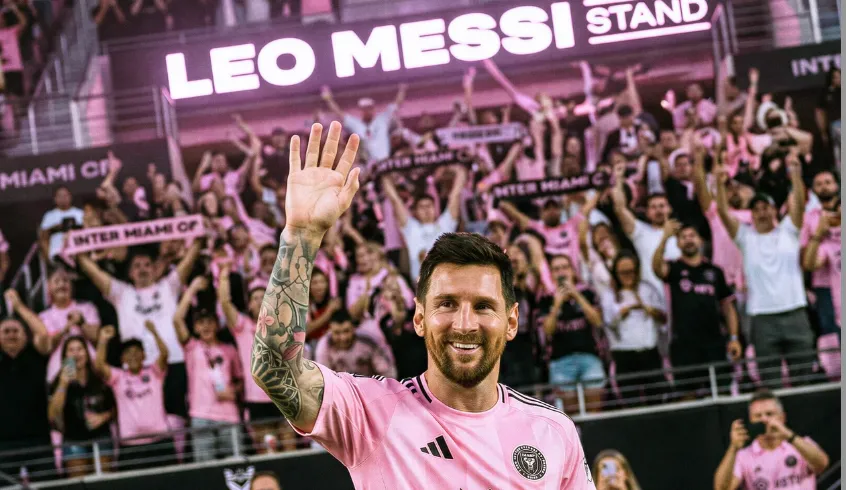
Credit: Inter Miami CF
The timing made the whole gesture land even harder. Nu Stadium officially opened on April 4, and Messi immediately scored Inter Miami’s first-ever goal there, equalizing in the 10th minute against Austin FC before the match ended in a 2-2 draw. MLS called it the club’s first goal at the new venue. Inter Miami’s recap echoed the same point. So within days, the Leo Messi Stand stopped feeling like a future-facing tribute and started feeling like part of the building’s first mythology. The club named a stand after him, and then he wrote the opening line of the stadium’s history himself. You can also see that sequence in MLS’s official match story on Messi’s first Nu Stadium goal.
Inter Miami’s boldest idea here is not that Messi deserves honoring. That part is easy. The more interesting idea is that the club refused to wait for distance, retirement, or nostalgia. It chose to formalize the era while the era is still happening. In sports, buildings are supposed to outlast players. Here, however, the player is already part of the building. And after that first goal at Nu Stadium, the decision feels even harder to dismiss as mere spectacle. It now reads as something cleaner and smarter: a live monument for a live era.
➡️ Follow Poziwibe Sports for more stories where stadium culture, club identity, and defining athletes collide in real time.

