
The phrase pink katydid turns green sounds unusual, but that is exactly what scientists observed in Panama.
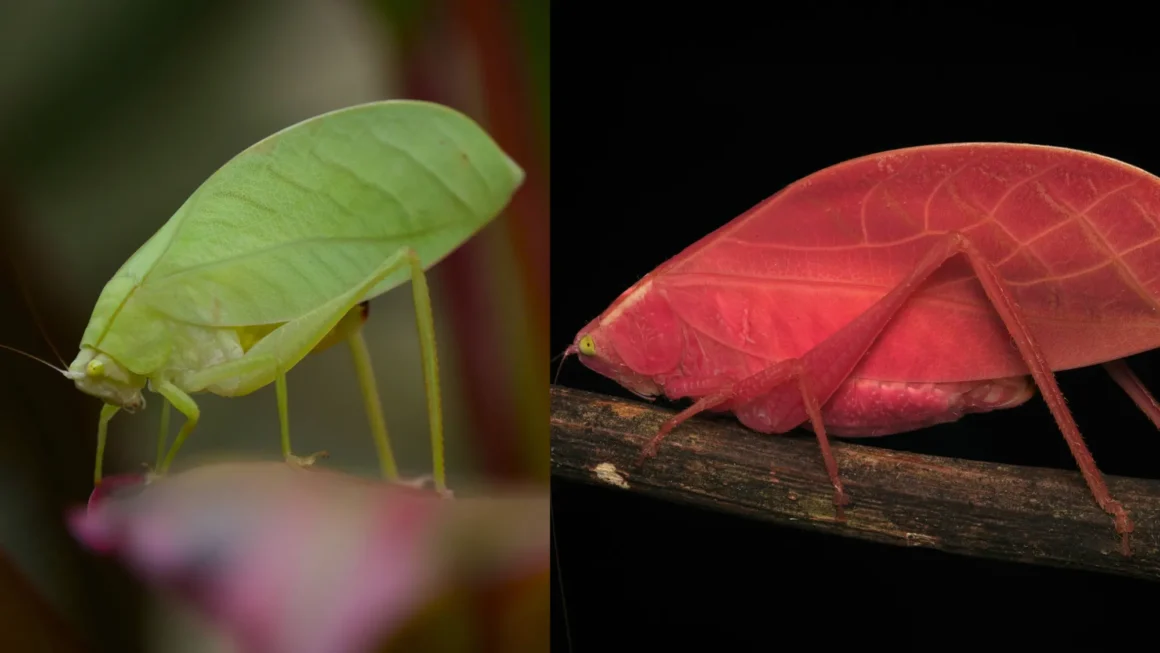
In a study published in Ecology, researchers tracked an adult female Arota festae, a leaf-mimicking katydid found near the Smithsonian Tropical Research Institute’s field station on Barro Colorado Island. When they first saw it, the insect was a vivid hot pink. Eleven days later, it had turned green.
That shift makes this more than a visually striking insect story. Pink katydids have often been treated as rare curiosities, almost like color mistakes in nature. This observation suggests something more purposeful may be happening.
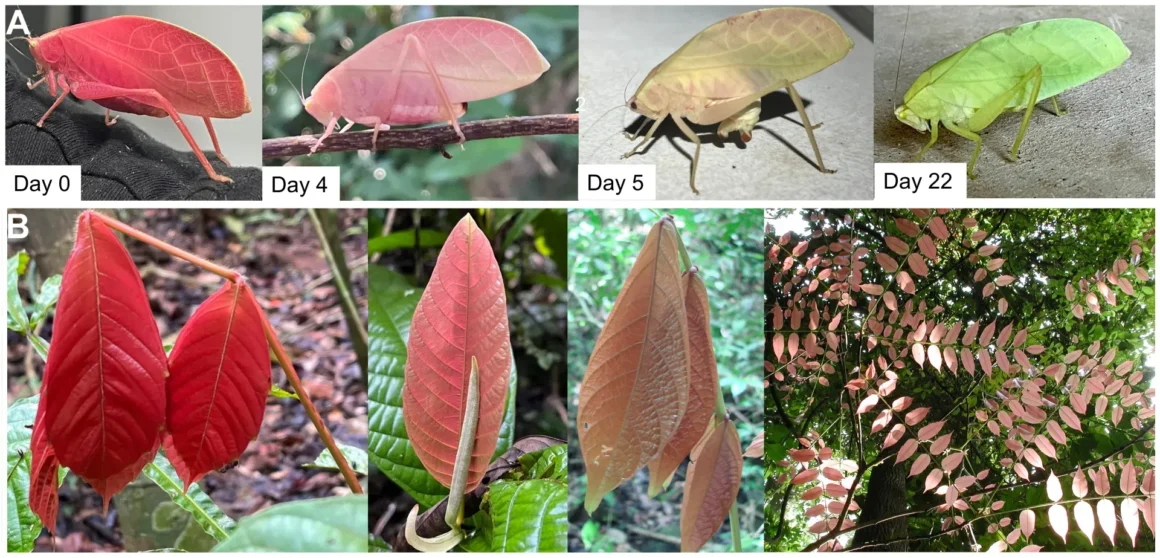
The Pink Katydid Turns Green as the Forest Changes Too
The researchers believe the insect may be matching a real pattern in tropical forests. Many young leaves do not begin green. They emerge in pink, red, or bronze tones, then turn green as they mature. Scientists call this pattern delayed greening, as explained in the University of Reading’s research summary.
That matters because the katydid may not have been standing out at all. In its pink stage, it may have blended in with newly emerged leaves. Later, as the surrounding foliage shifted back to green, the insect changed too.
If that explanation holds, this would not be a random color event. It would be camouflage timed to the life cycle of rainforest plants.
A Rare Observation with a Bigger Meaning
The finding is especially important because researchers say this appears to be the first recorded case of a katydid changing fully from pink to green within a single adult stage of life.
That gives scientists a new way to think about camouflage. We often imagine camouflage as something fixed: an animal matches one background and stays that way. But real habitats are not static. Forests change. Leaves age. Colors shift. Light moves.
An insect that changes with its environment may be better hidden than one that stays the same.
A Color Shift with a Bigger Meaning
What makes this story memorable is not just the color change. It is the reminder that nature does not always hide in the ways we expect.
A bright pink insect sounds impossible to miss. But in the right setting, that same color may be part of a much smarter survival strategy than it first appears.
Sometimes the most surprising thing in the forest is not what stands out. It is what turns out to belong there perfectly.
For readers who want the formal paper record, the study is also indexed on PubMed.
➡️ For more Nature stories that reveal how the wild works in unexpected ways, follow Poziwibe.

