
Artemis II has launched, sending humans back to deep space for the first time since Apollo with a crewed flight around the Moon – without landing.
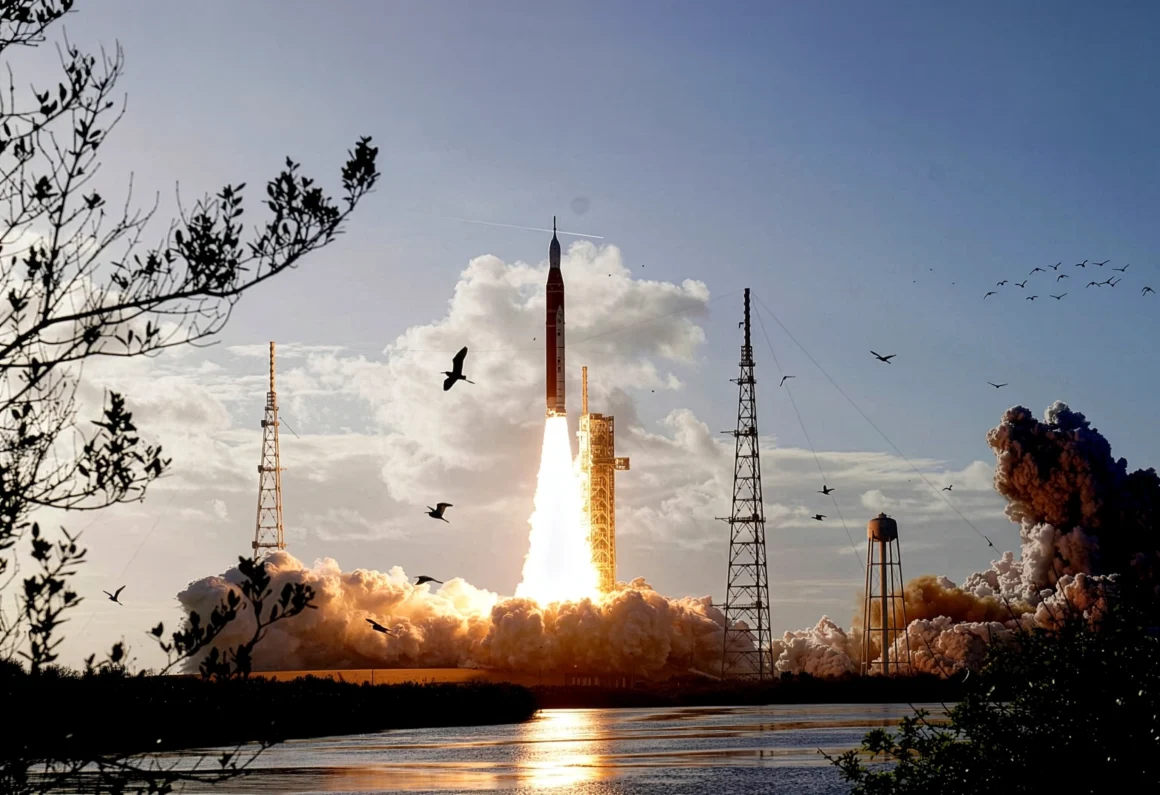
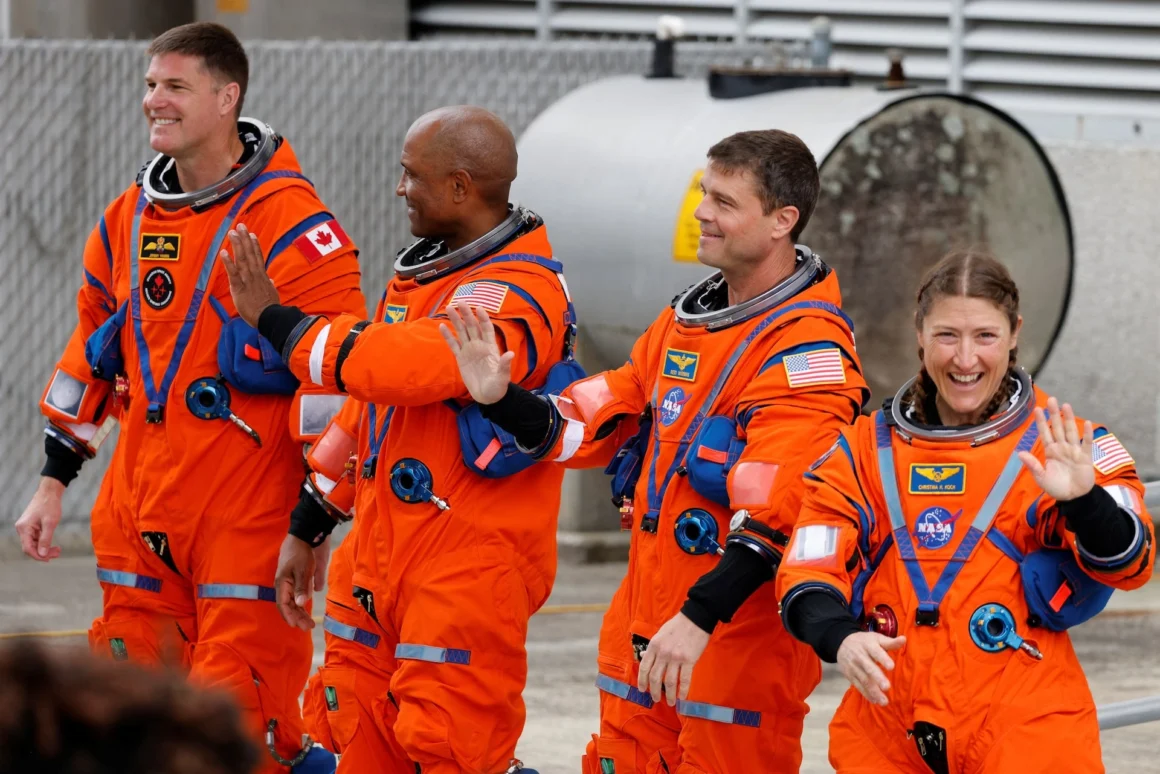
NASA has successfully launched the Artemis II mission, sending four astronauts around the Moon on a roughly 10-day flight that will not attempt a lunar landing. Instead, this is a crewed deep-space mission around the Moon, marking humanity’s first journey beyond low Earth orbit in more than 50 years. Artemis II lifted off from Kennedy Space Center on April 1, 2026, with Reid Wiseman, Victor Glover, Christina Koch, and Jeremy Hansen aboard Orion.
For years, Artemis existed as planning, testing, and expectation. Now it is a real mission already in motion. That shift matters more than the launch itself. Artemis II is no longer a future promise. It is proof that humans can leave Earth orbit again and travel at lunar distance.
The distance is the story
A launch always carries spectacle, but here the meaning sits in scale. Human spaceflight just stretched outward again. For decades, crewed missions mostly stayed in low Earth orbit. Artemis II breaks that pattern and reopens a distance that had effectively been closed since Apollo 17 in 1972.
The mission will take its crew roughly 384,000 kilometers (239,000 miles) from Earth, looping around the Moon and even pushing slightly beyond it before returning. That alone places it firmly in deep space. Leaving Earth orbit and reaching lunar distance is what defines this as a true deep-space mission, even without a landing.
Around the Moon, not onto it
That distinction matters. Artemis II is a lunar flyby mission, not a landing mission. Its purpose is to test Orion’s systems in real deep-space conditions—life support, navigation, communication, and overall mission performance—before later Artemis missions attempt to put humans back on the Moon.
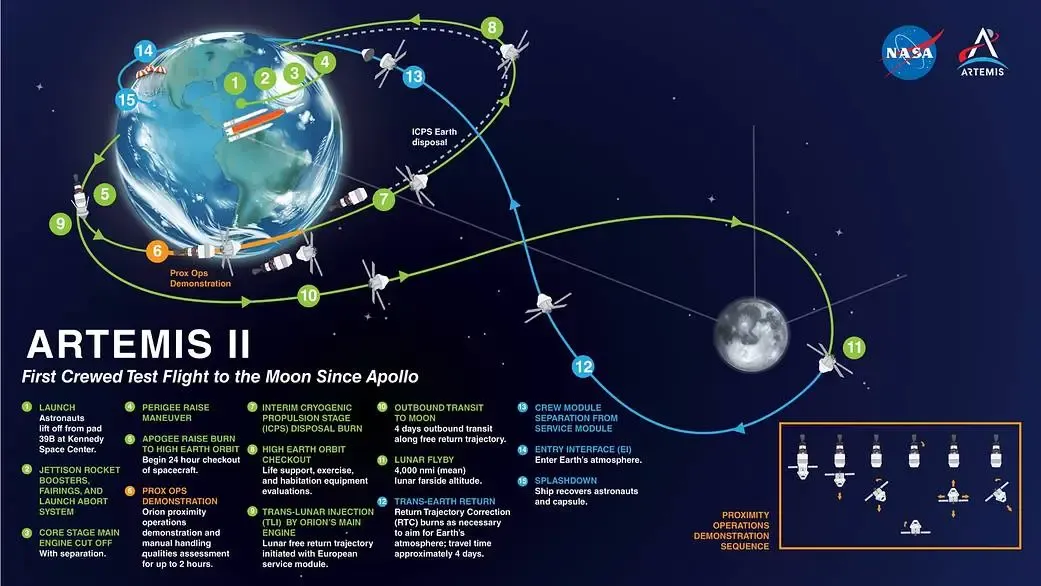
And that is exactly why the successful launch carries weight. Artemis II does not need a landing to feel historic, because its role is to prove that humans can go that far again safely and deliberately. Before liftoff, Artemis still felt like preparation. After liftoff, it became something measurable and real.
A crew that makes the moment feel current
Part of the mission’s significance comes from who is on board. Christina Koch becomes the first woman assigned to a lunar mission, Victor Glover the first Black astronaut assigned to one, and Jeremy Hansen the first Canadian to take part in a lunar mission. That gives Artemis II a different tone than a simple Apollo echo. It carries historical continuity, but also reflects a broader and more current image of human spaceflight.
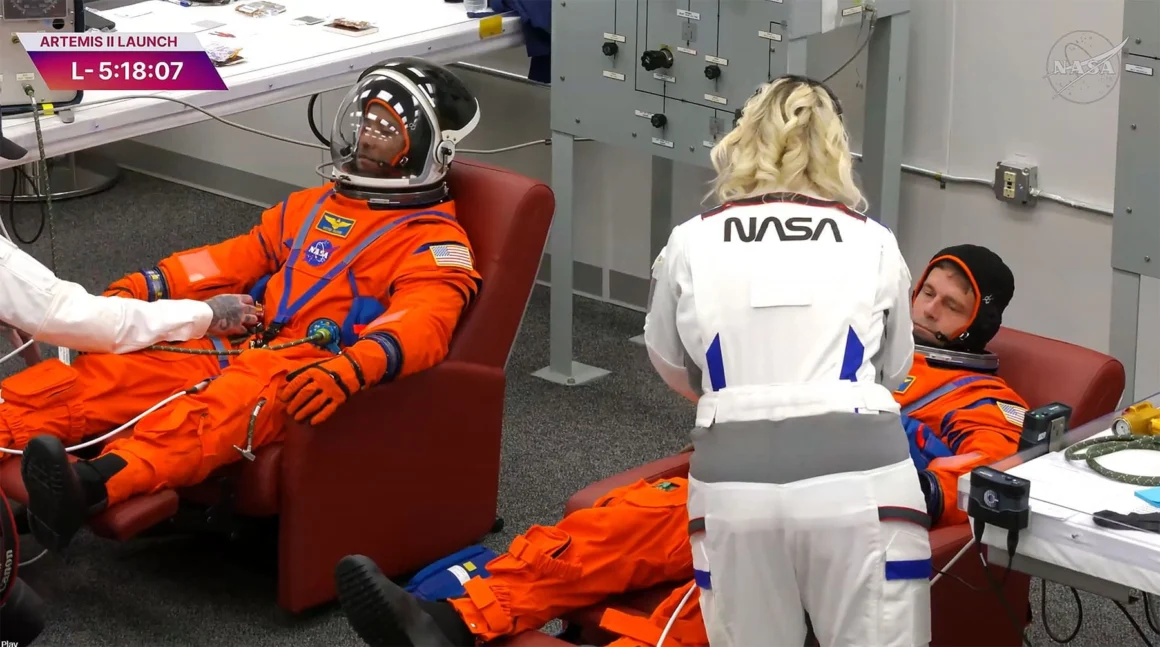
That is why this launch lands beyond its immediate milestone. Artemis II is not the moment humans step onto the Moon again. It is the moment humans begin going that far again. It reopens distance as something active, not historical. For the first time in more than half a century, deep space has human passengers again—and this time, it is part of a longer path forward.
➡️ Explore more Technology stories on Poziwibe for the moments when science stops feeling abstract and starts feeling real.

