
UniX AI says its Panther robot has entered households in Suzhou, but the most interesting part is not the breakfast demo. It is the company’s bet that wheels, stable mobility, and repeatable chores may matter more than humanoid showmanship inside a real home.
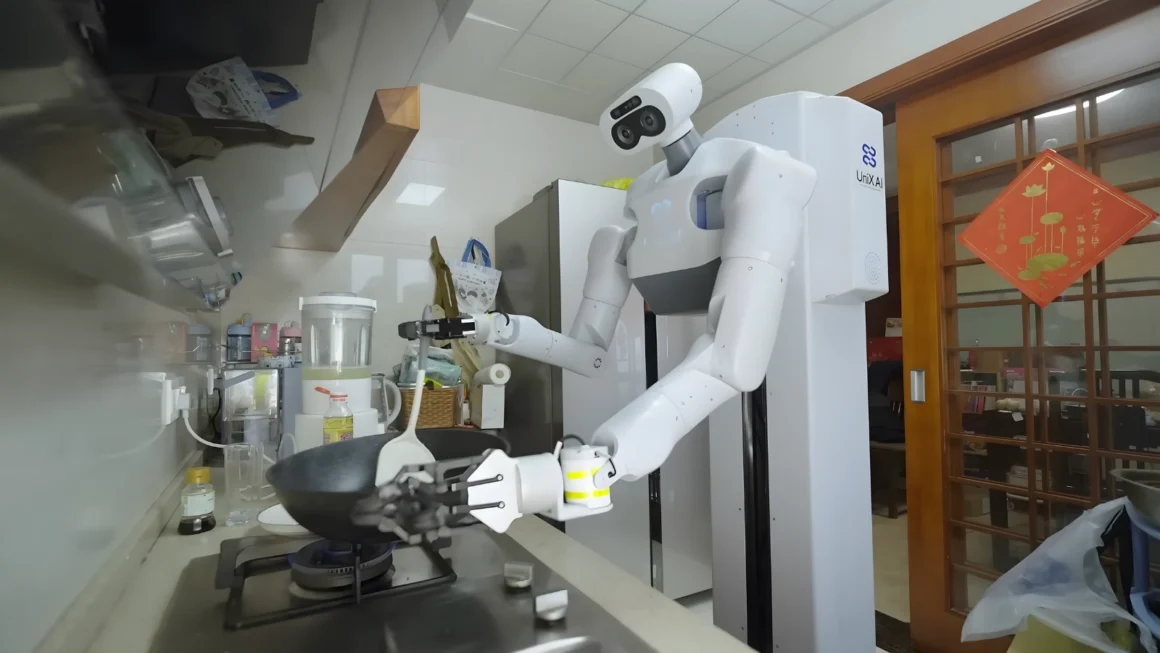
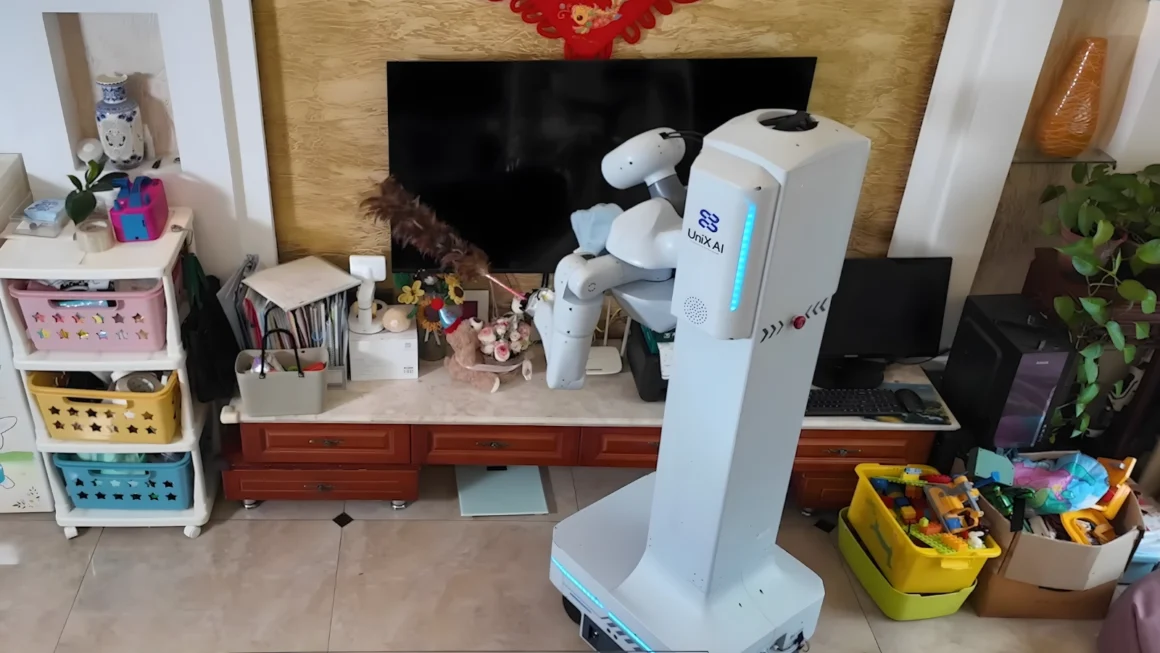
Many home-robot stories still lean on the same old fantasy: a machine that looks human, walks like a person, and somehow handles daily life with no friction. This one is more interesting for the opposite reason. In UniX AI’s official LinkedIn post about Panther entering households in Suzhou, the company says Panther can handle wake-up calls, home-appliance control, organizing, and cooking in real residential settings. That matters, but it should still be read carefully as a company-declared deployment milestone, not as an independently settled industry benchmark.
The real story is the design logic
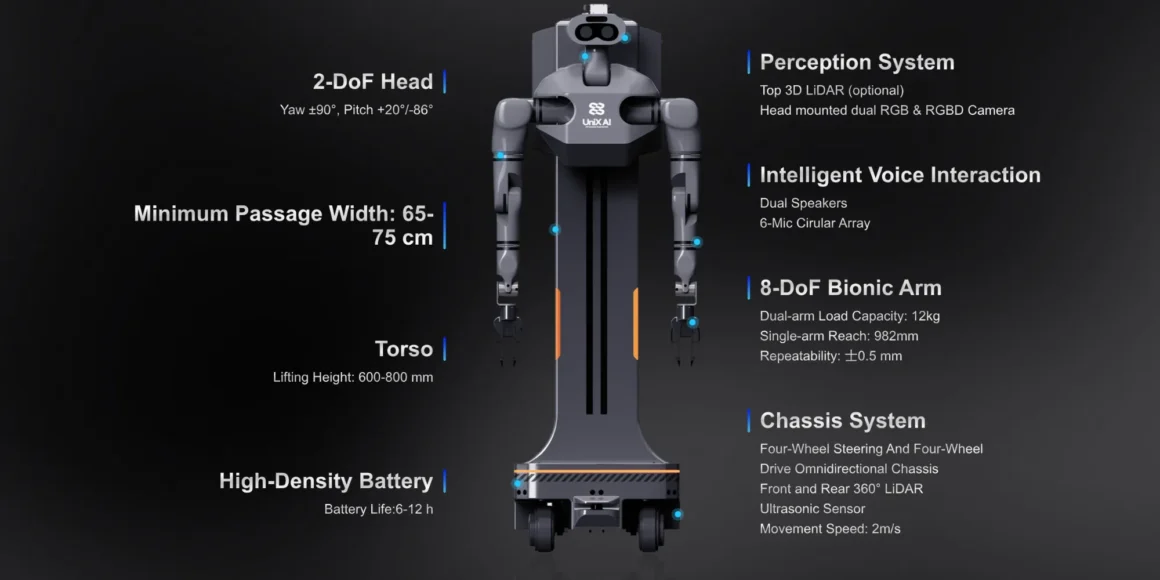
Panther’s official product page makes the angle clearer. UniX AI describes it as a next-gen full-size wheeled humanoid robot with 34 high-DoF joints, an omnidirectional four-wheel steering and drive chassis, an 80 cm upper-body lift, dual RGB and RGB-D cameras, a 6-mic array, and optional top 3D LiDAR. In other words, Panther is not built around the drama of walking. It is built around moving safely through indoor spaces and handling objects with more stability. That is a much more believable home-robot strategy.
Wheels may be the smarter home bet
That detail changes the whole feel of the story. A house is full of tight turns, clutter, uneven routines, and repeated small tasks. In that setting, balance is not the main challenge. Reliability is. A wheeled platform can save energy, stay steadier, and spend more of its system budget on perception, manipulation, and workflow coordination. Panther’s official spec sheet points in exactly that direction.
Panther and Wanda tell a more realistic story together
UniX AI’s product lineup also reveals something important: Panther and Wanda are different service bets, not one magical all-purpose robot. Panther’s official page lists 6–12 hours of battery life and 34 high-DoF joints. The official Wanda 2.0 page and related Wanda product materials present a different configuration and operating profile. That distinction matters because it shows UniX AI is not presenting one robot as the answer to every environment. It is building a service lineup with different strengths for different scenarios. That feels far more realistic than the usual one-robot-does-everything pitch.
The company is pushing a deployment story, not just a concept story
UniX AI’s official About page says the company was founded in 2024 in Suzhou and achieved mass production in 2025, with hundreds of units already delivered across household and broader commercial-service scenarios. Its official Household & Hotel application page also frames the robots around structured service environments rather than lab-only demonstrations. That is the deeper shift here. The company is trying to move embodied AI from spectacle into service infrastructure.
The home is still the hardest test
Even so, a polished demo is not the same as daily usefulness. Real homes create edge cases all the time. Lighting changes. Objects move. Kitchens get messy. People interrupt tasks. Pets appear out of nowhere. That is why this story is worth watching. If Panther succeeds, it will not be because it looks futuristic. It will be because it can do ordinary things consistently, safely, and without turning every task into a performance. That is the point where a home robot stops being content and starts becoming product. The company’s own household deployment post is what makes that question feel newly concrete.
➡️ Follow Poziwibe Technology for more stories about embodied AI, home robotics, and the machines quietly moving from demo stage into daily life.

