
Artemis II has entered deep space after leaving Earth orbit, marking the first time since 1972 that humans have traveled beyond it. The real turning point in NASA’s lunar mission was not liftoff. It was the moment Orion fired its main engine, left Earth orbit, and sent four astronauts back into deep space for the first time since Apollo.
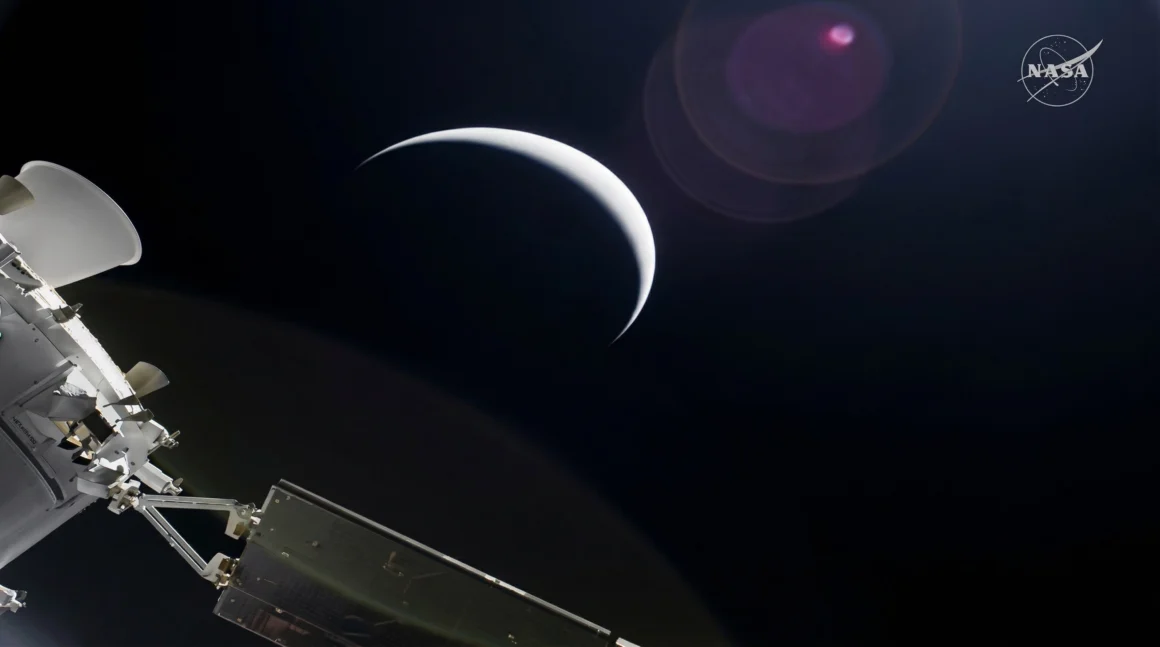
The Artemis II mission is expected to carry its crew farther from Earth than any humans have traveled before, reaching more than 4,700 miles beyond the Moon.
Artemis II became more than a routine mission update on Thursday night, when Orion completed its translunar injection burn and stopped circling Earth. NASA said the burn lasted five minutes and 50 seconds, beginning at 7:49 p.m. EDT, and it placed the crew on a precise path toward the Moon.
That is the moment that changed the story.
Not the launch. Not the countdown. The point when Earth orbit ended and the mission truly left home behind.
For the first time since Apollo 17 in 1972, humans are now beyond Earth orbit again. That fact carries more weight than any single technical step because it changes the scale of Artemis II. This is no longer just about reaching space. It is about leaving Earth behind.
The burn that changed the mission
Before the burn, Orion was still moving through a stretched-out orbit around Earth. After it, the spacecraft was on its way to the Moon.
That distinction matters. A launch on its own is still procedural. Reaching space on its own still means staying close to Earth. But once the translunar injection was complete, Artemis II moved beyond preparation and into real distance.
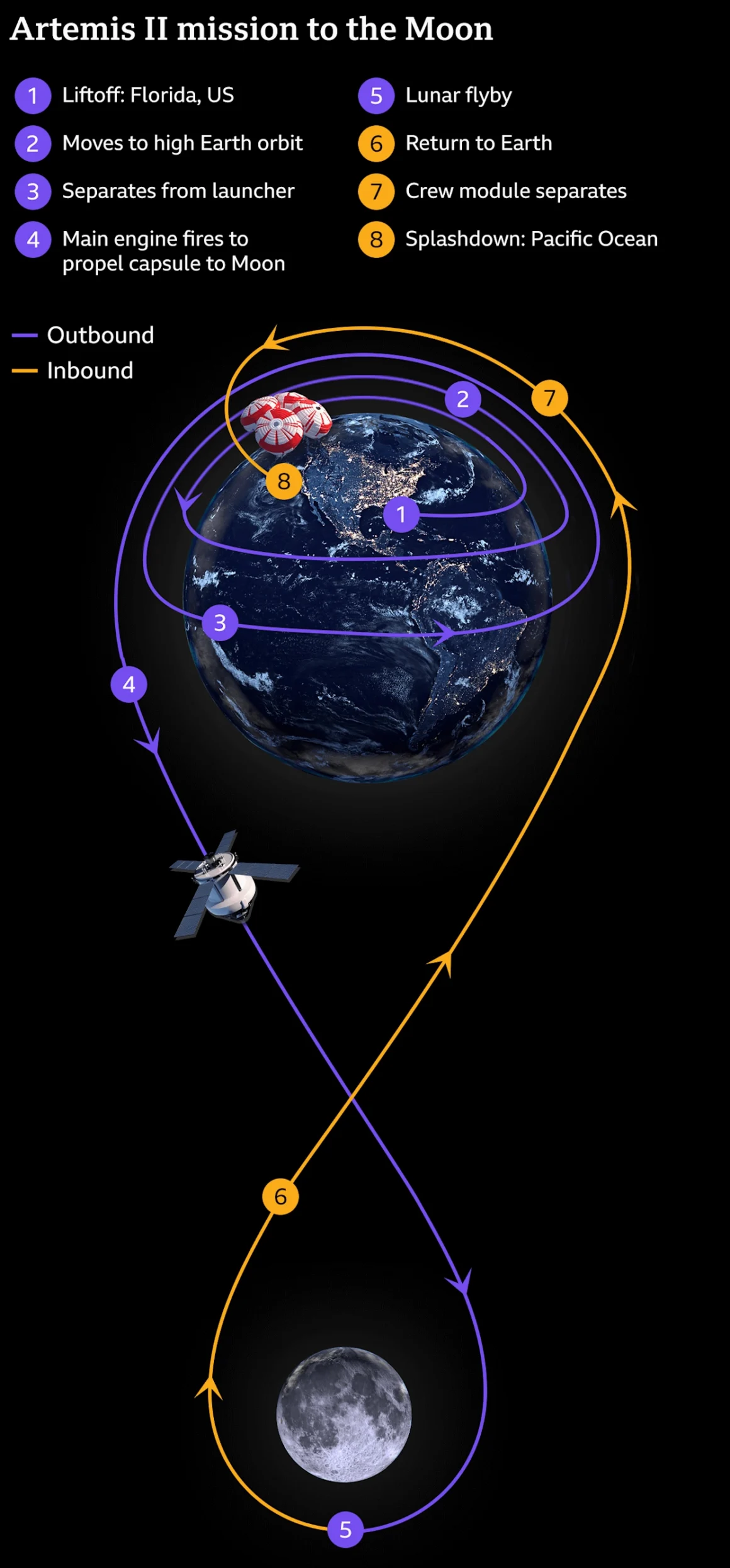
NASA says Orion and its crew are now on course to fly around the Moon and return to Earth on an approximately 10-day mission. The spacecraft will pass around the far side of the Moon before heading back. Even now, that route is enough to make the scale of the mission feel immediate.
Earth is getting smaller
The strongest detail in this story may be the simplest: Earth is now shrinking in the window.
From inside Orion, that shift is already visible. Reuters reported that commander Reid Wiseman described Earth as a shrinking sunlit globe, while Jeremy Hansen told mission control the crew had a beautiful view of Earth’s dark side lit by the Moon.
That image does more than decorate the mission. It reframes the entire journey.
As home recedes, space stops feeling abstract.
That is where Artemis II becomes more than a systems test. It becomes a human perspective story.
The crew includes Reid Wiseman, Victor Glover, Christina Koch, and Jeremy Hansen, the Canadian astronaut who is now the first non-American on a mission around the Moon. AP also reported that the mission could carry humans farther from Earth than ever before, with a chance to surpass the distance record set by Apollo 13 during the flight.
Artemis II returns humans to deep space
What makes this moment worth holding onto is not only where Artemis II is going, but what it reopens.
For decades, crewed spaceflight mostly happened close to Earth, inside a range that remained reachable and familiar. Artemis II breaks that pattern. It brings deep space back into human experience instead of leaving it locked inside the Apollo era.
That is the clearest way to read the mission now: humanity is outside again.
Earth is no longer the whole frame. It is the bright world falling farther into the background while four astronauts continue toward the Moon.
➡️ Explore more Technology stories that turn major science moments into something human, memorable, and worth sitting with.

