
Stella Juva turns solar from a clean-mobility story into something more urgent: a mobile healthcare concept built to keep moving, and keep equipment running, where fuel and grid access are less reliable. Developed by Solar Team Eindhoven and supported by AIKO, the project points toward a future where energy, transport, and care travel together.
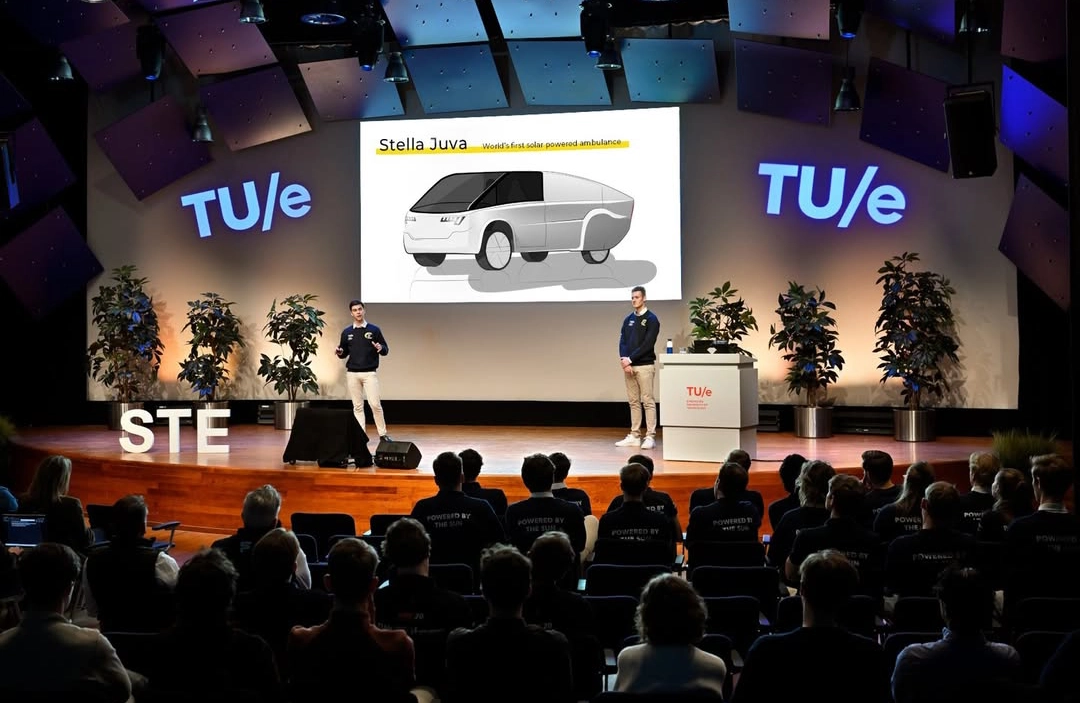
Solar Team Eindhoven unveiling the Stella Juva concept at TU/e.
Most solar vehicle stories stay in a familiar lane. They talk about emissions, efficiency, or futuristic design. Stella Juva feels different because the core idea is access. Instead of asking how solar can make transport cleaner, it asks how solar can help medical help reach places that are harder to serve. AIKO says the vehicle is being built to operate on solar energy while also supporting onboard medical equipment, with a road target of July 2026.
The bigger idea is mobile energy for healthcare
That shift matters more than any headline-friendly label. This project is not only about how the vehicle moves. It is also about what the vehicle can power once it arrives. In practical terms, that gives Stella Juva a stronger story than a standard concept ambulance. It frames the vehicle as a moving energy platform for care in remote or infrastructure-limited regions.
Why Solar Team Eindhoven fits this project
The team behind Stella Juva did not come from nowhere. TU/e describes Solar Team Eindhoven as a multidisciplinary student team focused on the sustainable mobility of the future. AIKO also points to the team’s earlier work, including Stella Vita and Stella Terra, and says the group has won the World Solar Challenge Cruiser Class four straight times. That track record gives this ambulance concept more weight. It suggests the project comes from a team that already thinks in real-world solar use cases, not just in one-off prototypes.
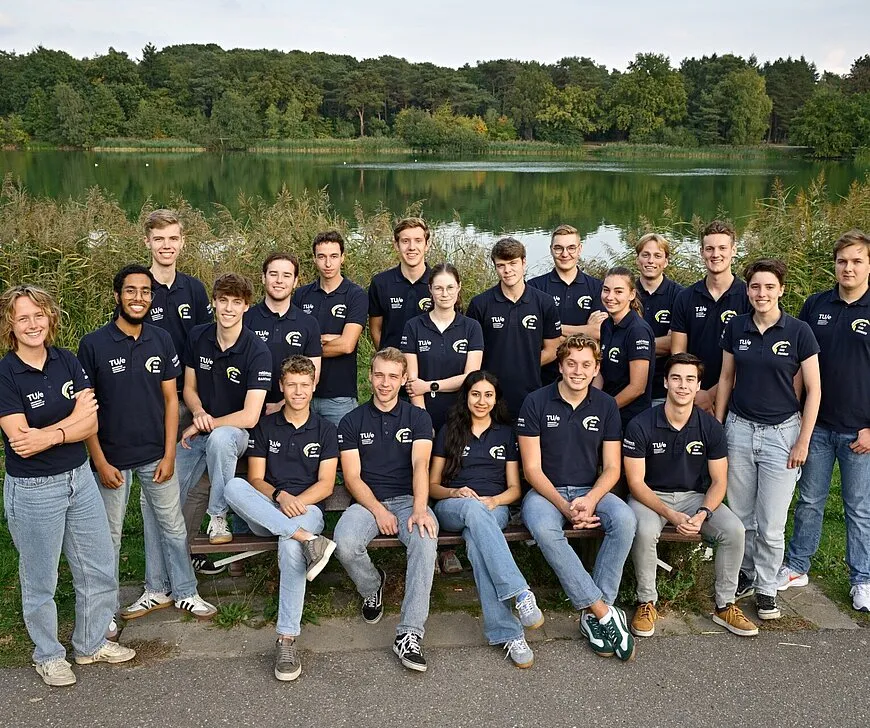
The Solar Team Eindhoven students developing Stella Juva, the solar ambulance project from TU/e.
The AIKO partnership is part of the logic
AIKO says Stella Juva will use its ABC, or All Back Contact, solar cells. On its official products page, the company describes ABC as a high-efficiency, high-reliability cell architecture with high power output per watt. That does not make the story exciting on its own. However, it does explain why the collaboration matters. A healthcare vehicle that aims to work independently needs solar hardware that supports durability and energy yield, not just marketing language.
The medical layer makes the concept more concrete
The healthcare angle becomes more believable on Solar Team Eindhoven’s official partners page. There, the team lists Amref Health Africa as a partner. It also says Delft Imaging Systems is supporting the mobile clinic with expert guidance and medical screening equipment used inside the vehicle. That detail changes the tone of the whole story. Stella Juva starts to feel less like a transport demo and more like a test of how care and power can move together.
Why the framing matters more than the brag
This is exactly why the safest angle is not a “first-ever” claim. A stronger frame already exists. Stella Juva is interesting because it pushes solar into a more human problem. It connects energy to response time, equipment access, and reach. If the concept works, solar stops being just a cleaner way to move and starts becoming part of how care arrives. That is the real Poziwibe story here.
➡️ Follow Poziwibe Technology for more stories where engineering stops feeling abstract and starts changing how the real world works.

