
A one-of-a-kind handbag presented as the first product made from T-Rex Leather turns a fossil-era protein story into something more intriguing. It suggests how synthetic biology could begin reshaping the language of luxury materials.
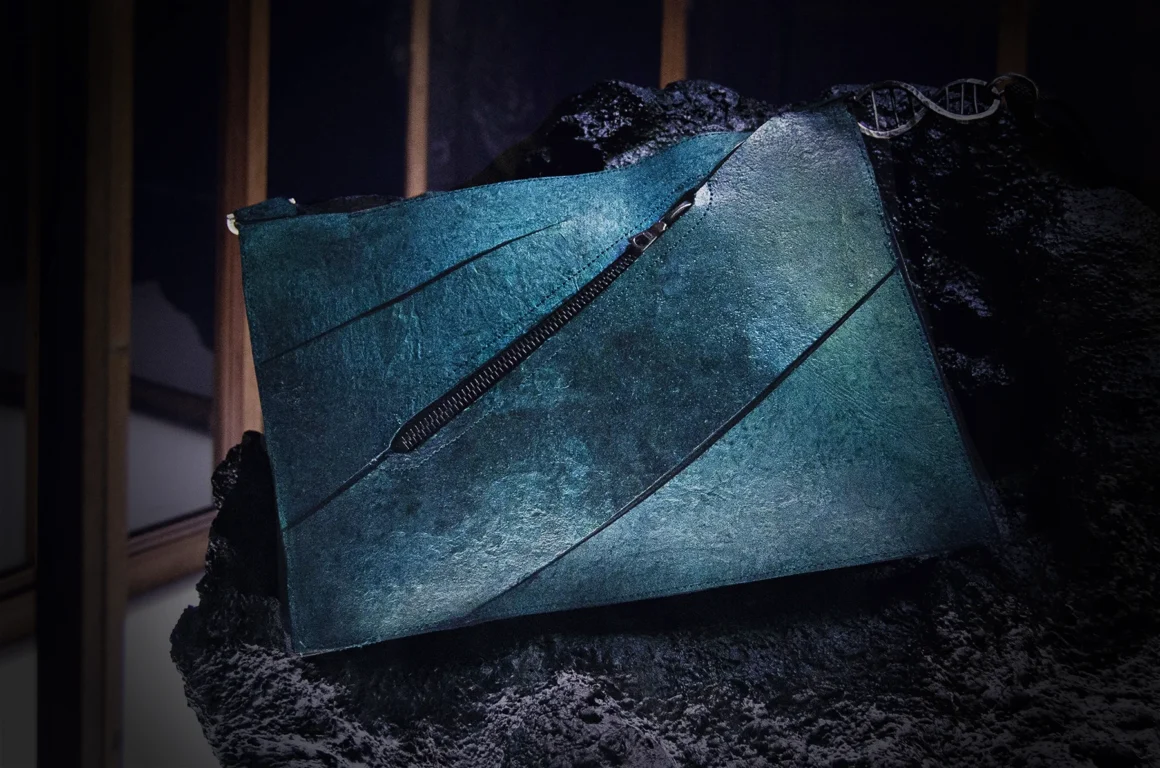
At first glance, this sounds like a novelty story built to go viral: a luxury handbag, a dinosaur label, and a museum reveal. Yet the more interesting layer sits underneath the spectacle. What debuted in Amsterdam on April 2, 2026 was not just a collectible object. It was a proof-of-concept. It hinted at a future where fashion may draw part of its prestige from labs, engineered cells, and material science, alongside heritage craftsmanship.
A one-off bag with a bigger material story
VML, The Organoid Company, and Lab-Grown Leather created the project. The one-of-a-kind handbag was designed by Enfin Levé as the first expression of the T-Rex Leather project developed by those three partners, and the team unveiled it at Amsterdam’s Art Zoo Museum. In their own framing, this was the first public product made from the T-Rex Leather concept. It was not a standard retail launch. That distinction matters because the bag works less like a typical fashion release and more like a concept object introducing a new material category.
That is also why the story feels larger than the bag itself. In VML’s official launch announcement, the companies position the piece as a showcase for a future-facing luxury material, not a stunt accessory. And at this stage, it is not a product people can simply go out and buy. The bag is a singular collector’s piece now on display at Art Zoo. After its six-week exhibition ends on May 11, it is set to go to auction and sell to the highest bidder, with Reuters reporting a starting bid of more than $500,000. The object is singular. The ambition behind it is clearly broader.
The science angle is what gives the story its edge
According to the companies, the process starts with fossilized T. rex collagen as a blueprint. From there, it combines synthetic DNA design, genome engineering, and Lab-Grown Leather’s tissue-engineering platform. The goal is to create collagen that can become a leather-like material. The teams also describe the result as biodegradable, traceable, durable, and repairable. More broadly, they present it as a way to reduce some of the environmental and animal-welfare burdens tied to conventional leather production.
That scientific framing gives the story more than visual novelty. It points to a version of luxury where rarity does not come only from craftsmanship, heritage, or rare material sourcing. It may also come from biofabrication, lab precision, and engineered material identity. VML’s earlier partnership announcement makes that larger ambition especially clear.
Why the “dinosaur” claim still needs caution
At the same time, the project becomes stronger when described carefully. Reuters reported skepticism from outside paleontologists, including Melanie During and Thomas R. Holtz Jr. They argued that surviving dinosaur collagen appears only in fragmentary traces. It does not amount to recreated T. rex skin or a conventional leather structure. Put simply, this is better understood as a biomaterial inspired by ancient collagen evidence than as literal dinosaur hide brought back to life.
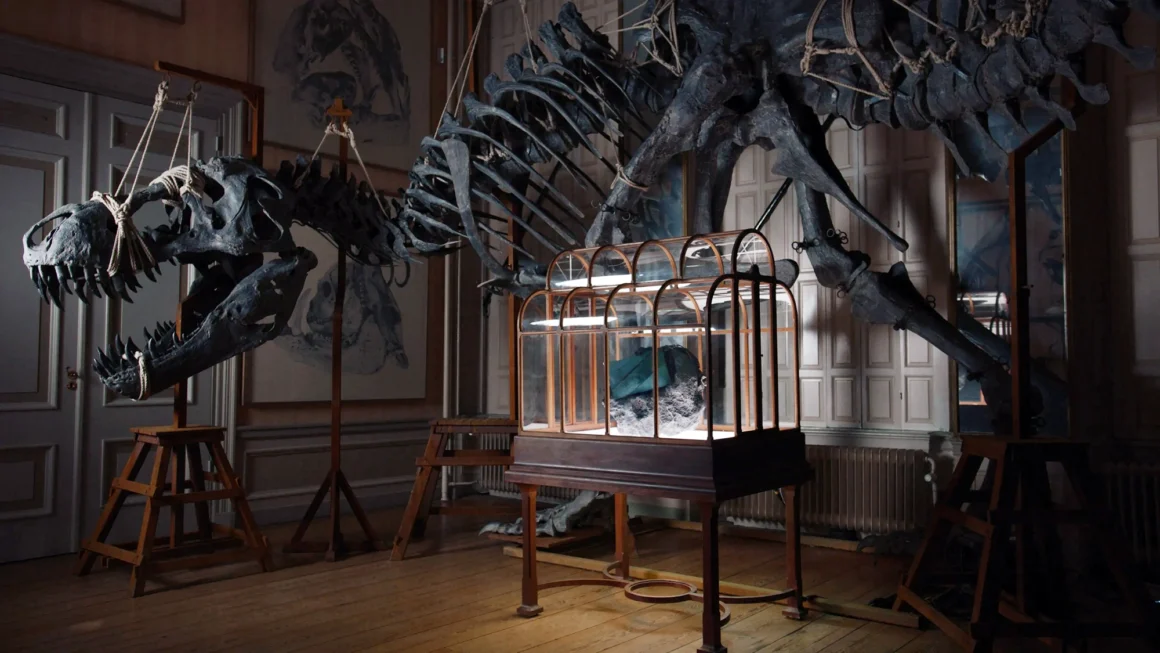
That caution does not flatten the wonder of the story. If anything, it sharpens it. The more credible version is not “fashion made a real dinosaur bag.” It is that biotechnology, branding, and design have advanced far enough to produce a luxury object that uses prehistoric biology as part of its conceptual and material language. That is still unusual. And it still feels worth noticing.
What this may reveal about future luxury
The most revealing part is not whether this exact material becomes mainstream. It is the direction it points toward. Luxury now faces pressure to tell new stories about ethics, sourcing, innovation, and environmental responsibility. In that context, a project like this feels less like a finished answer and more like an early signal that science could become part of premium design culture itself.
That is why the handbag lands as intriguing rather than merely bizarre. The science behind collagen survival adds to that intrigue. MIT researchers recently outlined a molecular explanation for how collagen may survive in dinosaur fossils far longer than expected. Their MIT explanation of collagen longevity does not validate every marketing claim here. Still, it does show why ancient collagen remains such a compelling scientific thread.
For now, this remains a one-of-a-kind object. Still, it offers a memorable preview of a luxury future where the story of a material may matter almost as much as the object made from it.
➡️ Explore more Technology stories on Poziwibe for future-facing ideas where science, design, and culture overlap in unexpected ways.

