
A regulatory and engineering shift is moving supersonic travel from a long-standing idea into a defined part of future aviation.
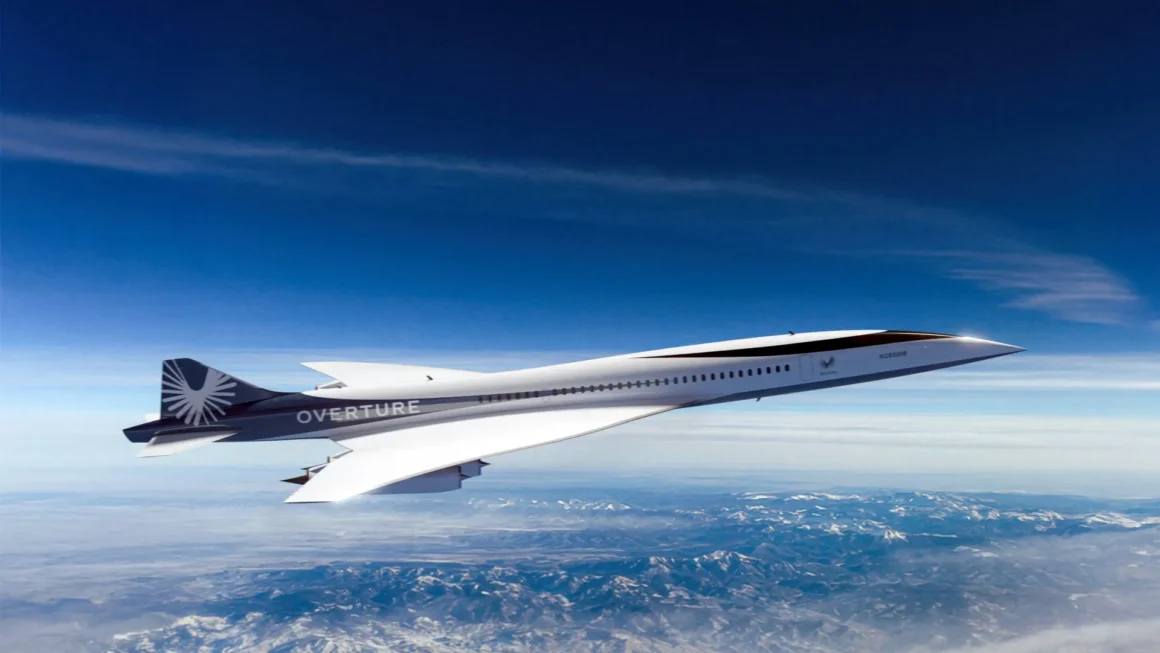
Supersonic travel is moving into real use as aircraft like Overture, developed by Boom Supersonic, advance beyond concept and into production planning, backed by airline orders and tested technology.
For years, the return of faster-than-sound passenger flights depended on whether the model could actually work at scale. That question is now being answered through design choices that focus less on pushing limits and more on fitting into existing aviation systems.
The shift is not about speed alone anymore. It is about making that speed workable.
Built as a system, not a showcase
Concorde showed what was possible, but it remained limited in reach. High costs, restricted routes, and operational complexity kept it from expanding beyond a narrow segment.
The current approach is more structured. Overture is designed to carry 60 to 80 passengers at roughly twice the speed of conventional aircraft, cutting long-haul travel times in half.
That means routes like London to New York could take just over three and a half hours instead of seven.
Airlines have already committed to early orders, placing the aircraft within a commercial framework before it even enters service.
That changes the starting point. Instead of proving that supersonic flight is possible, the focus is on integrating it into regular airline operations.
Constraints are being reduced, not ignored
Earlier limits around noise and efficiency shaped how Concorde could operate. Those same constraints are now being approached with different solutions.
Overture is designed without afterburners, bringing takeoff noise closer to what passengers and airports already expect from long-haul aircraft.


At cruising altitude, flight conditions can be managed so that sonic effects do not reach the ground in certain scenarios, allowing more flexibility without changing the physics itself.
The aircraft is also being developed to run on sustainable aviation fuel, aligning it with current environmental requirements rather than working against them.
These changes do not remove every limitation, but they reduce enough friction to make broader use possible.
Speed now depends on fit
The role of speed is also being reframed. Instead of existing as a premium exception, it is being positioned as part of a wider network of long-distance travel.
Shorter flight times can compress multi-day trips into a single day, changing how distance affects scheduling and access.
That does not guarantee widespread adoption. But it does place supersonic travel in a position where it can be evaluated alongside existing options, rather than outside them.
Here, the role of Boom Supersonic becomes clearer. The company is not just building a faster aircraft, but positioning it within an operating model that airlines can realistically scale.
Supersonic travel is no longer being tested as an idea. It is being shaped to work within the system it once struggled to fit.
➡️ This kind of future mobility shift shows up on Poziwibe in Technology.

