
A new satellite-based analysis suggests the planet is not simply getting brighter at night. It is becoming more uneven, more restless, and more revealing.
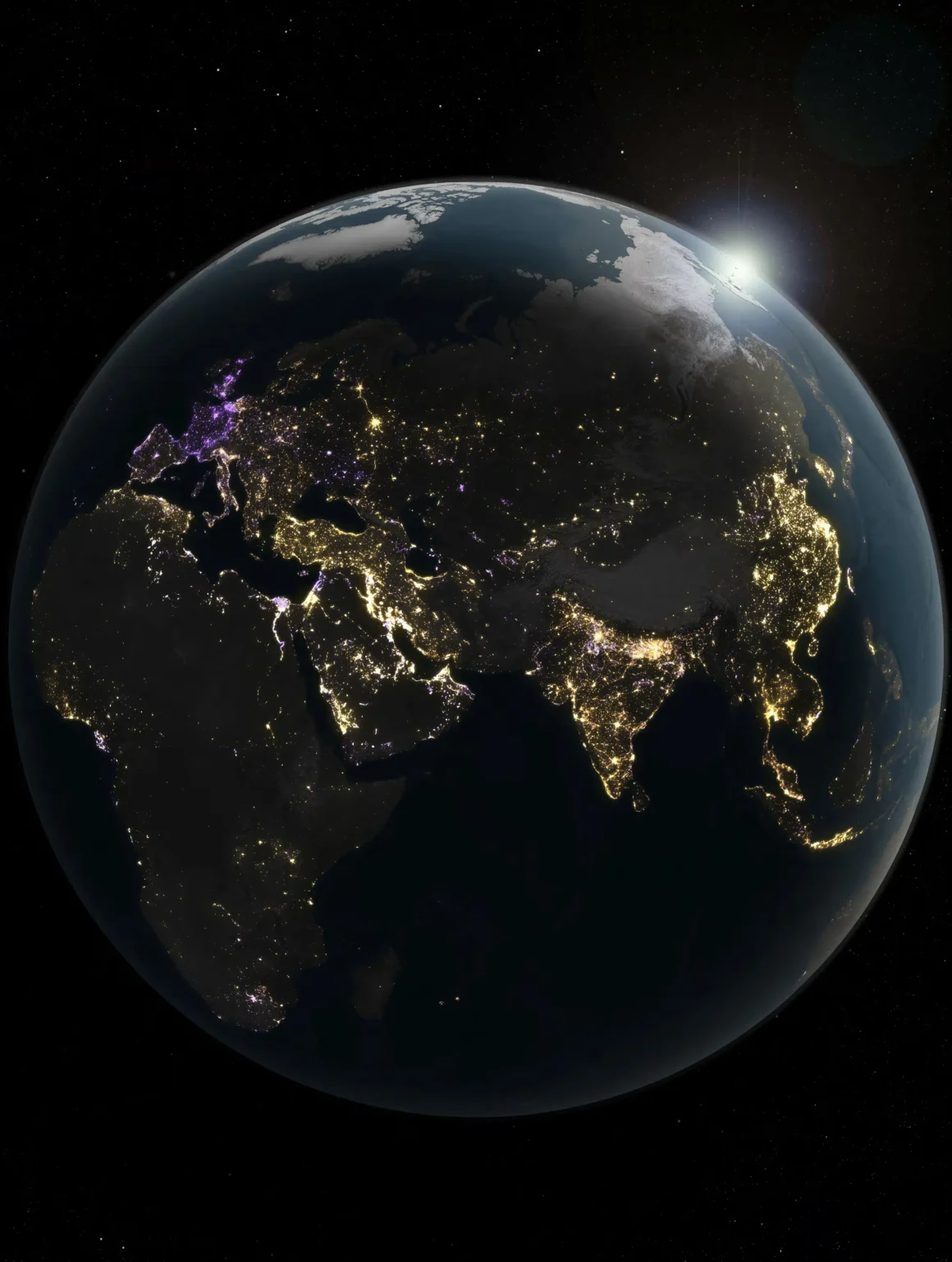
In that sense, darkness itself is starting to read like a record of development, disruption, and human choice.
The surprising part is not that Earth is brighter at night. People have watched cities glow from orbit for decades. The bigger shift is that the glow no longer follows one smooth, predictable pattern. A new Nature study, published on April 8, analyzed daily night-time satellite imagery from 2014 to 2022. It found that global artificial light at night rose by a net 16% over that period. However, the researchers say the more important story is volatility. Brightening and dimming are now happening side by side, often within the same regions. On average, each changing location showed 6.6 distinct shifts over nine years.
The planet is brightening, but not in one direction
That makes this feel bigger than a routine light-pollution update. The illuminated Earth now reads almost like a live map of human momentum. In some places, new light signals urban growth, infrastructure expansion, and wider electricity access. In others, fading light reflects policy choices, economic strain, disasters, or war. The study found especially strong brightening in parts of sub-Saharan Africa and Southeast Asia, while Europe showed a more structured dimming pattern shaped by energy-saving measures and dark-sky efforts. Europe, in fact, posted a 4% net decrease in night-time radiance relative to its 2014 baseline.
The data behind that picture came from NASA’s Black Marble night-lights products, which are derived from the VIIRS Day/Night Band sensor on Suomi NPP, NOAA-20, and NOAA-21. NASA says these products provide daily, monthly, and yearly records of global night lights and are used to study everything from disaster impacts to light pollution and human activity patterns. In other words, this is not just a beautiful orbital view. It is a working observational system for understanding how people reshape the night.
What these changing lights actually say about us
This is where the story opens up. Night light is not merely brightness. It is behavior made visible. When previously dark areas begin glowing, that can signal electrification, mobility, trade, or new public infrastructure. When regions dim abruptly, the cause may be conflict, blackouts, or sudden system failure. The study explicitly frames these changing night patterns as a dynamic lens on urban evolution, energy transitions, policy effects, and ecological consequences.
NASA’s own Earth at Night map archive makes that transformation easy to see. The archive offers downloadable global flat maps and high-resolution image files, while NASA’s 2012–2023 change visualization adds another layer by showing where the world gained or lost visible lighting over time. Together, they turn an abstract environmental signal into something readers can grasp instantly.
The part of the story that reaches beyond the map
Still, this is not only a story about prettier data. As the planet gets brighter, darkness becomes less ordinary and more fragile. The U.S. National Park Service notes that light pollution has documented effects on wildlife, plant development, human health, energy use, and the visibility of the night sky. It also emphasizes that dark skies are part of the natural rhythm of life on Earth, not just an aesthetic extra.
That is why this new research lands differently. It does not just show that human presence is expanding. It shows that night itself is becoming a measurable expression of policy, inequality, conflict, technology, and access. The old view of a steadily brightening Earth was simpler. This one is more honest. And maybe more powerful too, because it reminds us that what we do after sunset is now written across the planet in light.
➡️ Follow Poziwibe Nature for more stories where science, environment, and human behavior meet in ways that change how the planet looks and feels.

