
A polka-dot zebra foal in Kenya has turned one of the natural world’s most familiar designs into something unexpectedly memorable.
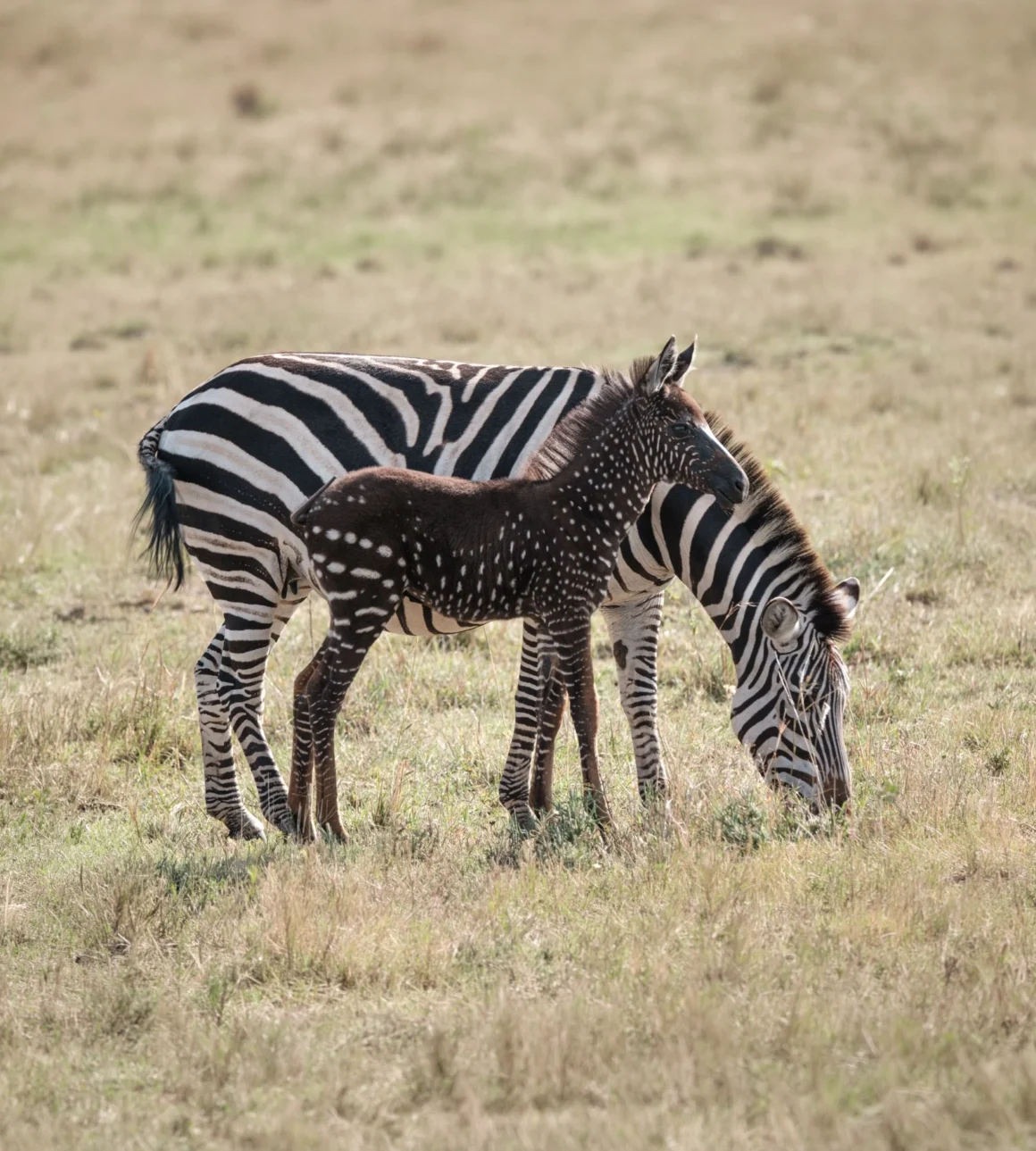
Spotted in the Maasai Mara National Reserve, the young plains zebra was photographed with pale dots and broken markings instead of the precise striping most people associate with zebras. Scientists linked the unusual coat to pseudomelanism, a rare pigment variation that can disrupt normal stripe formation.
Why the polka-dot zebra foal stood out
Zebra patterns feel timeless because they are usually so exact. That is what made this foal so striking. Instead of the sharp black-and-white rhythm people expect, its coat appeared darker overall, with light spots scattered across the body in a pattern that looked closer to polka dots than stripes. National Geographic reported that this was likely caused by pseudomelanism, a condition that can alter how a zebra’s markings develop.
The foal was seen in Kenya’s Maasai Mara, a landscape where plains zebras are common enough that an animal like this becomes instantly unforgettable. Even within a species estimated at more than 500,000 individuals, a coat pattern this unusual remains exceptionally rare. That contrast is part of what gives the story its force: nature can still surprise us inside patterns we think we already understand.
Kenya’s deeper zebra story
What gives the moment more meaning is where it happened. The foal itself was a plains zebra, but Kenya also plays a central role in zebra conservation overall. The Grevy’s Zebra Trust says Kenya held an estimated 2,812 Grevy’s zebras in 2018, compared with 230 in Ethiopia, making Kenya the stronghold for one of Africa’s most endangered large mammals.
That wider context matters because unusual wildlife stories can easily become only visual stories. A rare coat grabs attention quickly. Conservation is quieter. It depends on habitat quality, water access, connected rangelands, and enough ecological stability for young animals to survive beyond their first days. Kenya’s zebra story is not only about what looks extraordinary in a photograph. It is also about whether the surrounding landscape can continue doing the patient work that survival requires.
A rare sight with a bigger meaning
The most memorable part of this story is not just that one foal looked different. It is that the difference makes the usual pattern feel newly visible. Zebra stripes seem fixed until one animal briefly breaks the rule.
That is why this image travels so well. It offers wonder first, then perspective. A rare coat reminds us that wildlife is not static, and that every young animal, unusual or not, still depends on healthy land beneath it. In the end, the real story is bigger than spots or stripes. It is about whether places like the Maasai Mara remain strong enough to hold both the ordinary beauty of the wild and the rare moments that make people stop and look twice.
➡️ Explore more Nature stories on Poziwibe for rare wildlife moments, conservation perspectives, and discoveries that make the living world feel surprising again.

