
NASA moon base plans no longer feel like a distant sci-fi promise. They feel like an operating model. In its March 24 policy update, NASA said it will pause Gateway in its current form, reuse applicable hardware, and move toward a phased lunar base built around sustained surface operations.
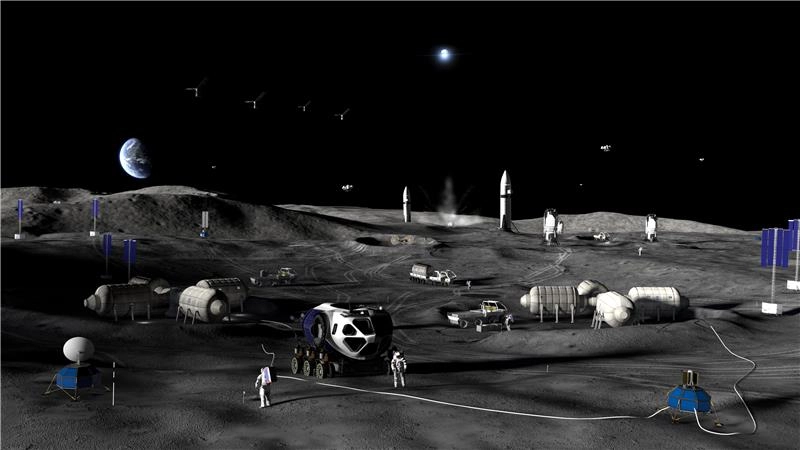
Paired with NASA’s broader Moon to Mars Architecture, the message is clear: the Moon is being reframed not as a symbolic destination, but as a place to learn permanence.
That is what makes this story worth discovering. Space headlines often sell us the next giant leap. This one is more revealing than that. NASA is shifting from a prestige-first vision of lunar return toward something more industrial, modular, and repeatable. The romance is still there. However, the logic underneath it has changed.
For years, Artemis was built around an orbit-first structure. Gateway was supposed to be the staging point around the Moon. In fact, NASA’s own Gateway overview still describes the station as a vital part of Artemis, while also carrying an editor’s note that the site is being updated to reflect the latest mission changes. That small contradiction says a lot. The architecture is moving faster than the old story about it.
Repetition Is the New Moonshot
NASA now says the base will grow in three phases. First comes a build-test-learn stage centered on more frequent robotic deliveries, rovers, power systems, communications, and science payloads. Then comes early infrastructure, with semi-habitable systems and regular logistics. Finally, heavier cargo systems would deliver the hardware needed for a continuous human foothold. That is not just a base plan. It is a plan for operational rhythm.
The mission sequence reflects that same mindset. NASA’s updated Artemis program page shows Artemis III as a 2027 demonstration mission in low Earth orbit, Artemis IV as the first lunar landing targeted for early 2028, and Artemis V as a late-2028 surface mission. NASA also says Artemis V is where Moon base construction is expected to begin, while future surface missions are intended to happen at least yearly and eventually as often as every six months as commercial systems mature.
That might sound less cinematic than the Apollo era. It is also more serious. NASA is no longer optimizing only for a single triumphant return. It is optimizing for cadence, logistics, mobility, power, and survivability. Reuters reported that the revised plan also includes more robotic landers, drones, and groundwork for nuclear power on the lunar surface. In other words, the agency is thinking less about touching the Moon and more about functioning there.
Why the Moon Base Matters Beyond the Moon
The deeper story is not really about lunar real estate. It is about institutional maturity. NASA’s own Moon-to-Mars framework says lunar missions are meant to teach humans how to live and work on another world before going farther out. That makes the base more than infrastructure. It becomes rehearsal space for the kind of reliability Mars would demand.
So yes, NASA moon base plans sound futuristic. Yet their most important feature is that they are becoming less theatrical and more practical. If the agency can make landing, building, resupplying, and staying feel normal on the Moon, then the real breakthrough will not be a headline-grabbing arrival. It will be the quiet moment when off-world life starts to look like a system instead of a stunt.
➡️ Follow Poziwibe’s Technology coverage for more stories where the future gets less abstract and more real.

