
The China satellite refueling test is interesting not because it created a working gas station in space overnight, but because it showed how orbital maintenance is starting to move from theory toward infrastructure.
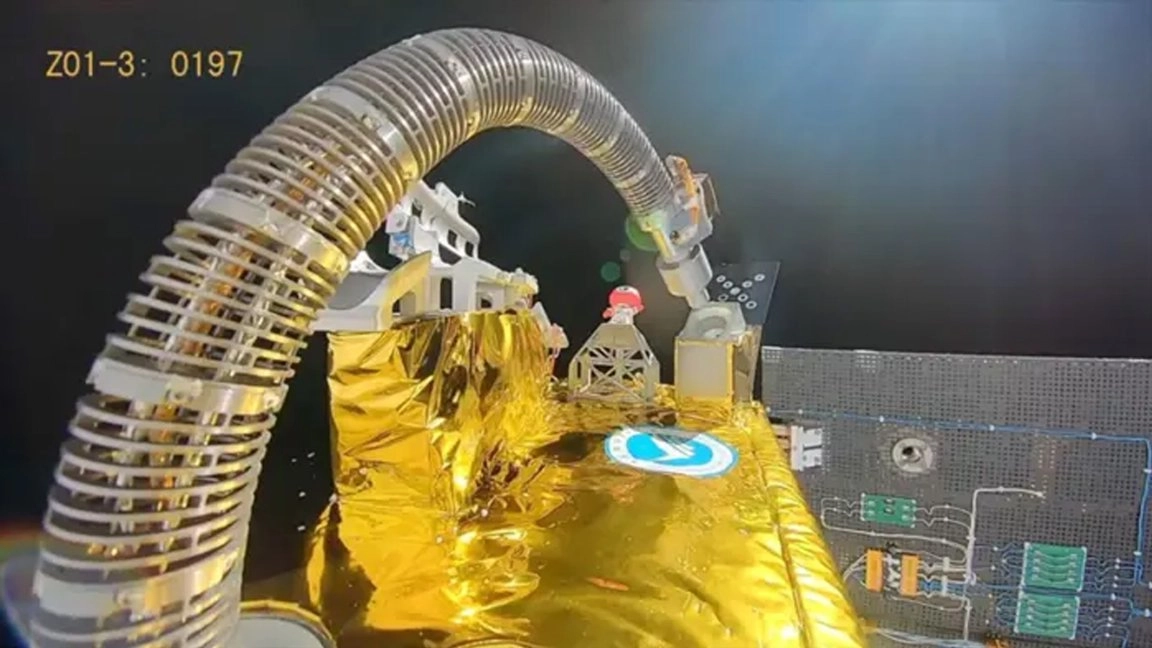
China’s Yuxing-3 06 experimental satellite, launched on March 16, completed a set of in-orbit robotic-arm demonstrations designed around refueling scenarios. However, the confirmed milestone was a simulation and docking-style technology test, not a verified fuel transfer to another operational satellite.
The China Satellite Refueling Test Stayed in Demo Mode
That distinction matters. Much of the attention around the story makes it sound as if one spacecraft has already pulled up beside another and topped off its tank. The available reporting says something more measured. The satellite completed autonomous programmed refueling simulation, ground-controlled refueling simulation, and vision-guided servo refueling simulation. Specialist adds that the arm moved toward a target port, entered it, held position, and then withdrew, which is a meaningful engineering step even if it stops short of servicing another satellite in the wild.
Still, the test is not arriving in isolation. In January 2025, China launched Shijian-25 specifically to verify satellite fuel replenishment and life-extension technologies. That means this latest demonstration fits a broader national push rather than a one-off stunt. In other words, the country is building a layered roadmap: first prove the interfaces, then prove the servicing logic, and eventually make the economics work.
Why Orbital Servicing Suddenly Looks More Real
This is also bigger than one country. The idea of repairing or extending spacecraft life in orbit has been inching toward practicality for years. DARPA’s Orbital Express demonstrated autonomous on-orbit refueling back in 2007. Later, Northrop Grumman’s SpaceLogistics turned life-extension into an actual commercial service in geosynchronous orbit. More recently, Astroscale has been advancing refueling technologies of its own with support tied to Japan’s long-term space strategy. So the real story is not whether space servicing is possible anymore. It is whether it can become routine, scalable, and commercially normal.
That is why the China satellite refueling test matters beyond the visual novelty of a flexible robotic arm. Satellites usually die for a boring reason: they run low on fuel. If operators can refuel, reposition, inspect, or even repair them in orbit, the economics of space change. Expensive assets could last longer. Replacement cycles could slow down. And, over time, orbital sustainability could improve if fewer satellites are discarded simply because they can no longer maneuver. That promise helps explain why state media framed Yuxing-3 06 as a future “space refueling station” platform, even though the present achievement is still an early demonstration.
For now, the most accurate takeaway is not that China has opened a fully operational fuel depot in low Earth orbit. It is that a new piece of the servicing puzzle appears to be working in space. That may sound smaller. In reality, it is the more important milestone. Space does not become sustainable through grand slogans. It becomes sustainable when difficult maintenance tasks start looking repeatable.
➡️ Want more stories like this? Explore how space Technology is shifting from spectacle to real-world infrastructure.

