
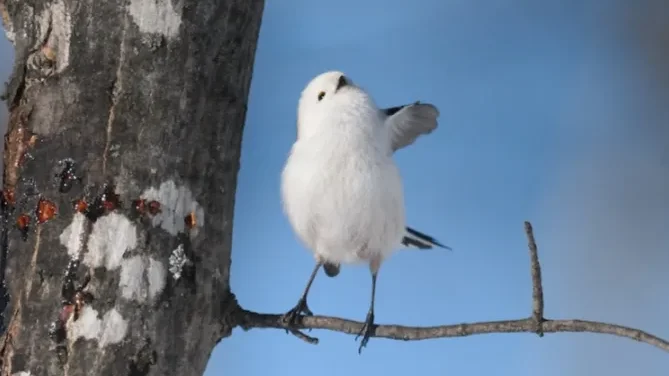
The Shima Enaga bird looks almost unreal on a winter morning in Hokkaido. As it lands on a branch, it nearly disappears into the snow – not because it blends in perfectly, but because it resembles a floating snowball with eyes.
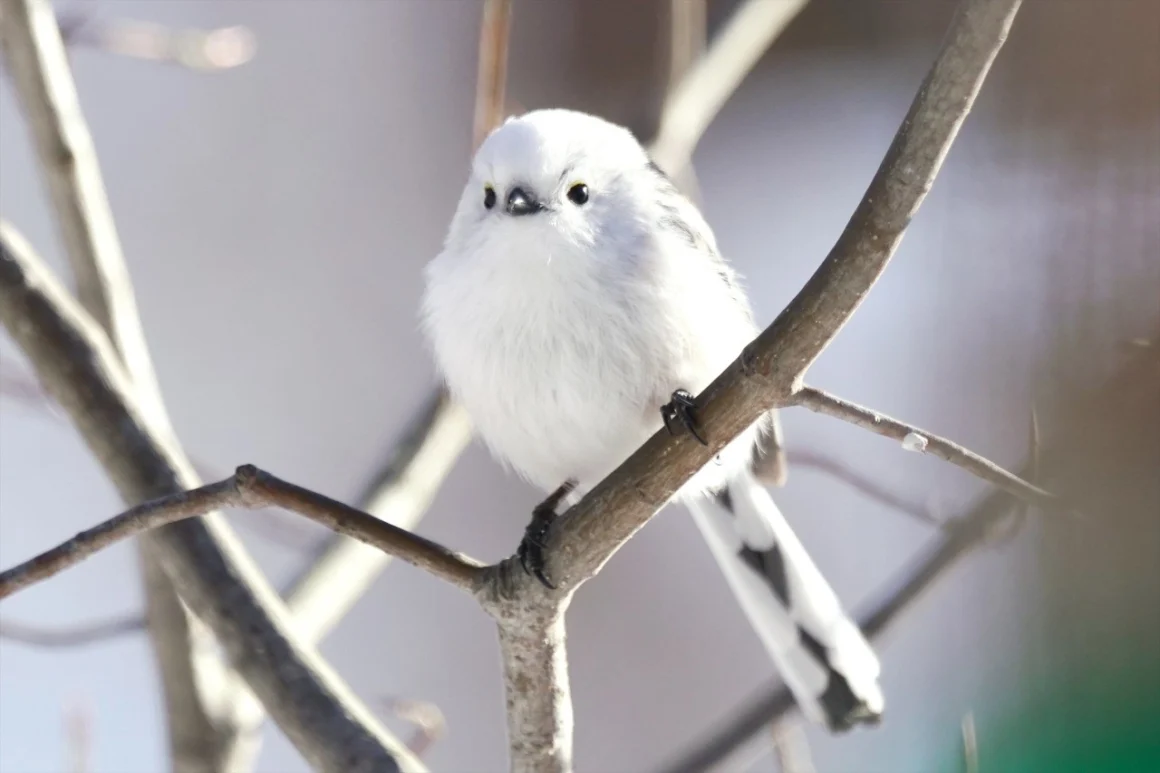
This tiny bird, a subspecies of the long-tailed tit, has quietly become one of the most shared and admired animals online. It continues to attract attention with its distinctive and unusually soft appearance.
Why the Shima Enaga Bird Looks Almost Unreal
This species lives primarily in northern Japan, especially in Hokkaido. Unlike other long-tailed tits found across Europe and Asia, this subspecies has a completely white face, giving it a soft, rounded appearance that feels almost designed.
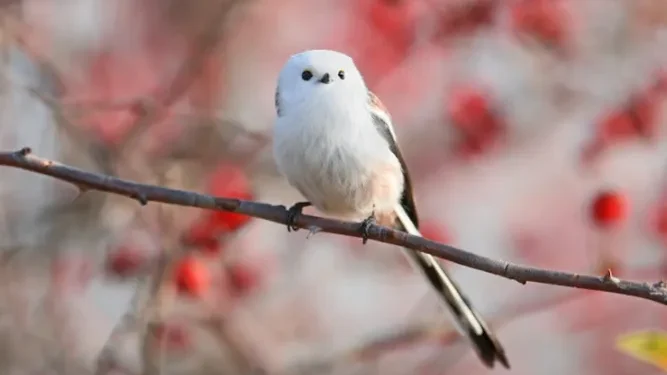
Its small body and long tail are typical, but in winter, its feathers puff up to conserve heat. That natural adaptation creates the shape people respond to – a perfectly round, snow-like form that feels both simple and striking.
Photographers in Japan have documented it for years, but its global visibility has grown through platforms like Instagram and Pinterest, where close-up images emphasize its expressive eyes and minimal, clean features.
Why This Bird Feels So Appealing
The fascination is not only about how it looks. It creates an immediate visual reaction that feels almost instinctive.
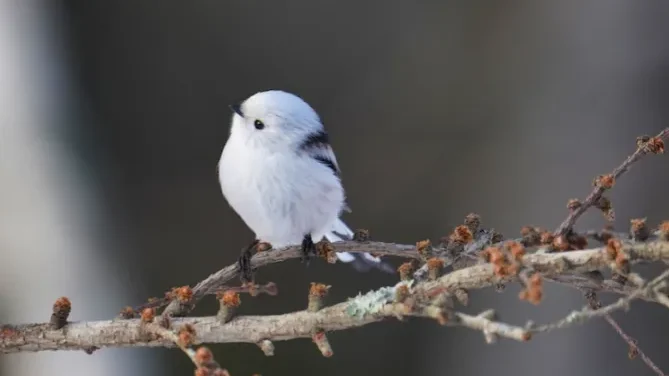
In visual psychology, round shapes and soft textures are often associated with safety, calm, and warmth. Its proportions — large head, small body, soft contrast — align closely with what researchers describe as “cute response” triggers.
That helps explain why images of this bird travel easily across cultures. Even without context, the emotional reaction tends to be immediate and shared.
Japan’s “Snow Fairy” and the Shima Enaga Bird
In Japan, the Shima Enaga bird has long held a subtle cultural presence. It is often called the “snow fairy,” a name that reflects both its appearance and its seasonal visibility.
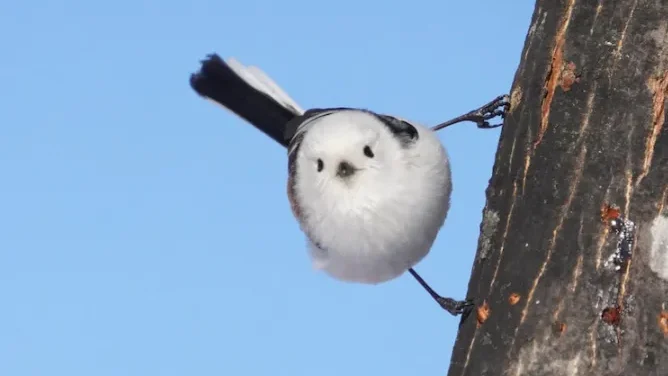
During winter, when landscapes turn nearly monochrome, it becomes more noticeable. Its movement across snow-covered branches creates small, fleeting moments that feel almost staged — light, quiet, and visually memorable.
Local photographers and nature observers have helped shape this perception, documenting it within its natural environment rather than isolating it. That context contributes to the calm and observational tone that defines its imagery.
More Than a Viral Animal
What makes it stand out is not just that it became popular, but how it did.
There is no spectacle or dramatic behavior driving its visibility. Instead, its appeal comes from stillness, form, and simplicity.
In a fast-moving digital environment, it offers something different. It creates a pause. It draws attention without demanding it.
And that may be why it continues to reappear —season after season— without losing its effect.
Because sometimes, what stays with people is not what makes noise, but what quietly exists.
➡️ You can explore more stories like this in our Nature section.
