
A newly documented climb in the Democratic Republic of the Congo turns a tiny freshwater fish into something far more memorable than a wildlife curiosity: a small-bodied athlete moving up wet stone, resting on ledges, and exposing how much biodiversity can hide in places most people never think to look.
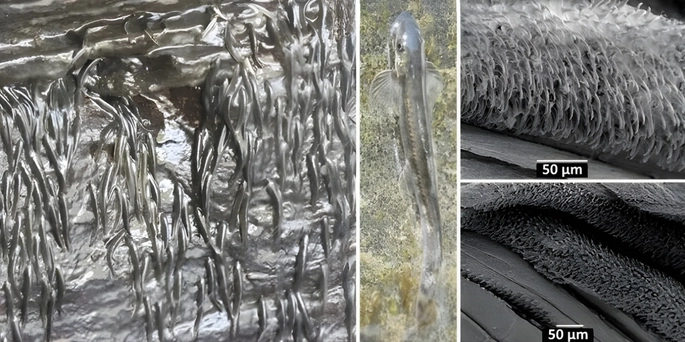
Study images of the climbing fish and its fin grip structures.
Waterfalls usually read like barriers in river stories. At Luvilombo Falls in the Democratic Republic of the Congo, they also work as a route. Researchers tied to a published Scientific Reports study, and highlighted by the Royal Museum for Central Africa, documented shellear fish, Parakneria thysi, climbing the wet rock beside the falls. That gives formal evidence to a behavior that had circulated for years in local knowledge and scientific discussion. For these fish, they look more like a gate.
The climb works more like traction than speed
The ascent is not one dramatic burst. Observers saw the fish press their fins against the rock in the splash zone, use tiny hook-like structures on their fins for grip, and push upward while the rear of the body wriggled side to side. Coverage tied directly to the new study says the full climb can stretch to nearly 10 hours, with most of that time spent resting rather than moving. This is not a leap. It is a grind.
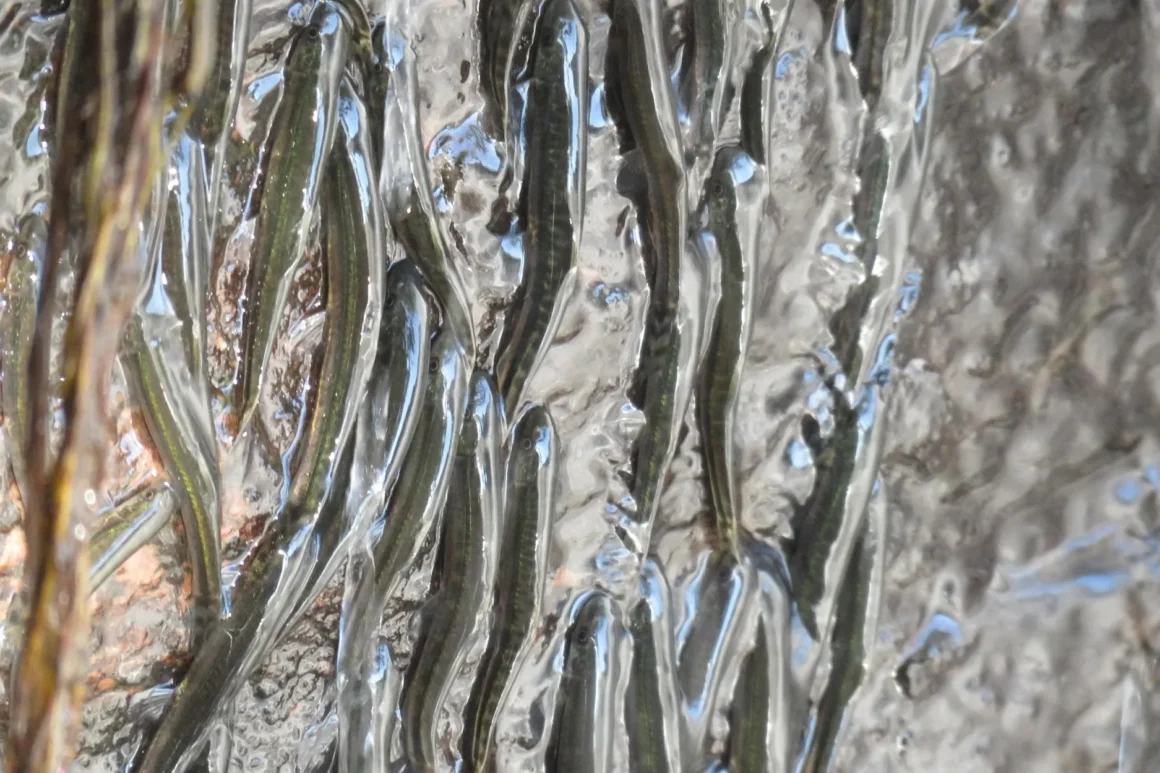
The real surprise is what the climb reveals
The setting matters almost as much as the behavior. An updated checklist for Upemba National Park reported 247 native fish species, including 45 endemic species, and said the park’s recorded richness had been seriously underestimated before recent work. Once that wider context comes into view, the climb stops looking like a one-off spectacle. The waterfall becomes less like scenery and more like terrain.
A small fish story with a much larger conservation shadow
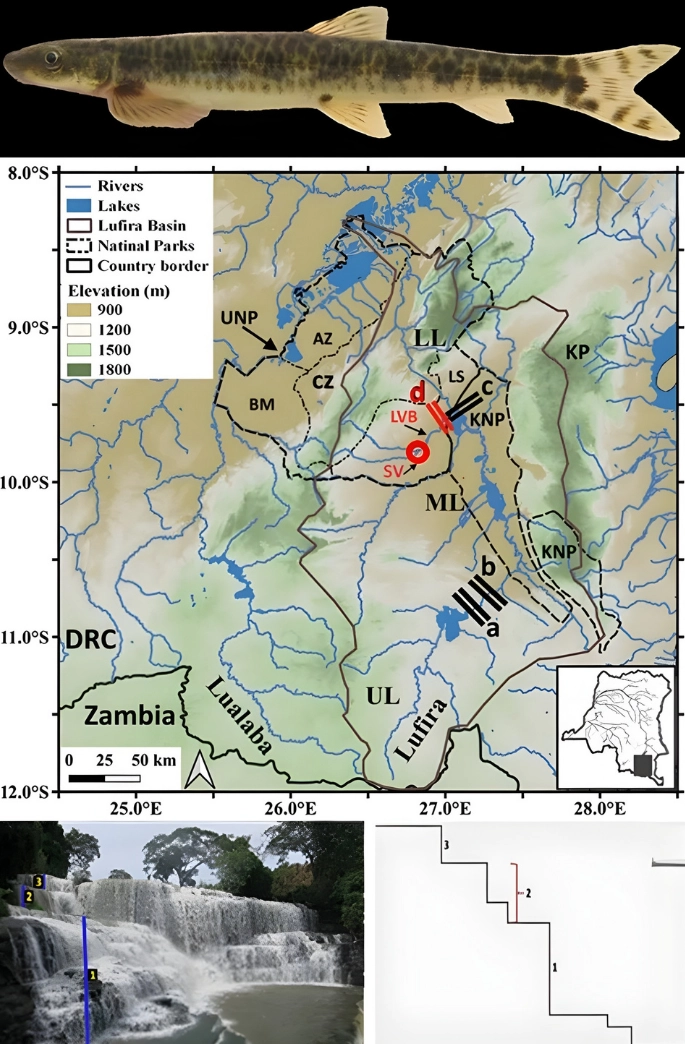
Study visual of Parakneria thysi and the climb site in Congo.
That richness also explains why this story carries more weight than a surprising clip. Regional fish research from the upper Congo basin points to high endemism, major knowledge gaps, and real conservation pressure across nearby river systems. A related Kundelungu fish diversity study maps conservation status categories across species in the area, while reporting tied to the new Luvilombo study points to illegal fishing and possible water diversion as risks around the migration corridor. In other words, this is exactly the kind of species that can be visually spectacular and still remain broadly invisible.
Why this one stays with you
Wildlife stories often lean on sheer size. This one works for the opposite reason. Its power comes from size contrast. A tiny freshwater fish meets a vertical rock wall and somehow turns that wall into a passage. That image lingers. So does the larger idea underneath it: this is not just that a fish climbed a waterfall, but that a hidden river world briefly became visible.
➡️ Follow Poziwibe Nature for more stories where unusual animal behavior opens a much bigger window into survival, adaptation, and the hidden drama of the natural world.

