
A major transformation at the Giardini reshapes one of the Biennale’s most historic spaces, shifting the focus from structure to experience.
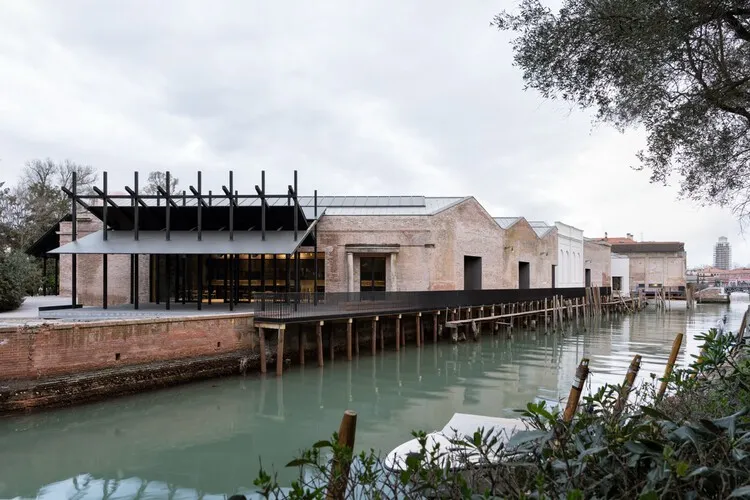
The center of one of the world’s most influential art events has just shifted.
At the heart of the Venice Biennale, the Central Pavilion at the Giardini has reopened with a quieter, more considered transformation. The update arrives as the 2026 edition prepares to welcome visitors from May 9 to November 22, with preview days beginning on May 6.
Instead of overpowering the building’s legacy, the transformation carefully repositions it for a different kind of future.
One that feels lighter, more adaptable, and more in tune with how exhibitions are experienced today.
A Space That Steps Back Instead of Forward
Rather than introducing a bold architectural statement, the transformation leans into restraint.
The Central Pavilion, originally designed in the late 19th century and expanded over time, has always carried a layered identity. This update acknowledges that history without adding another dominant layer on top.
Instead, the focus shifts to how the space feels to move through.


Moving through the space feels more natural. Visual noise has been reduced. Elements that once distracted from the exhibitions have been softened or removed. The result is a setting that does less, but allows more.
It feels quieter.
And that shift is intentional.
Flexibility Becomes the New Architecture
One of the most important changes is not what you immediately see, but how the space now behaves.
The transformation introduces a space that adapts to each exhibition instead of controlling it, allowing curators, artists, and the people moving through it to shape how it unfolds. Walls, pathways, and sightlines are no longer rigid or fixed.
Instead, the pavilion now supports the experience rather than defining it.
This matters because the Venice Biennale is not static. It evolves constantly, with each edition bringing a new perspective. A fixed environment can limit that.
A responsive one expands it.
Preserving History Without Freezing It
The challenge with a place like this is always balance.
Too much preservation, and the building becomes untouchable. Too much change, and it loses its identity.
Here, the approach sits in between.
Historical elements have been maintained where they still carry meaning, while unnecessary layers from previous interventions have been cleared away. Surfaces now feel lighter and less intrusive, keeping attention on what is being shown.


The goal is not to restore the past, but to make it livable again.
That distinction shapes the overall experience.
Why This Matters Beyond One Building
The Central Pavilion is more than just another exhibition space.
It is one of the symbolic anchors of the Venice Biennale. Changes here ripple outward, influencing how the entire event is felt.
By shifting toward flexibility and restraint, the transformation reflects a broader cultural change. The space stops trying to stand out. It starts letting people experience more.
The experience becomes more fluid, more personal, more open.
The focus shifts to what people feel inside the space.
The space is no longer just where art exists.
It becomes part of how it is experienced.
➡️ Explore more Lifestyle stories where culture, space, and experience come together.

