
The lunar flyby gave Artemis II its wonder. The return gives it something even more important: proof. As Orion races back toward Earth, NASA is testing the part of the mission future Moon flights will depend on most.
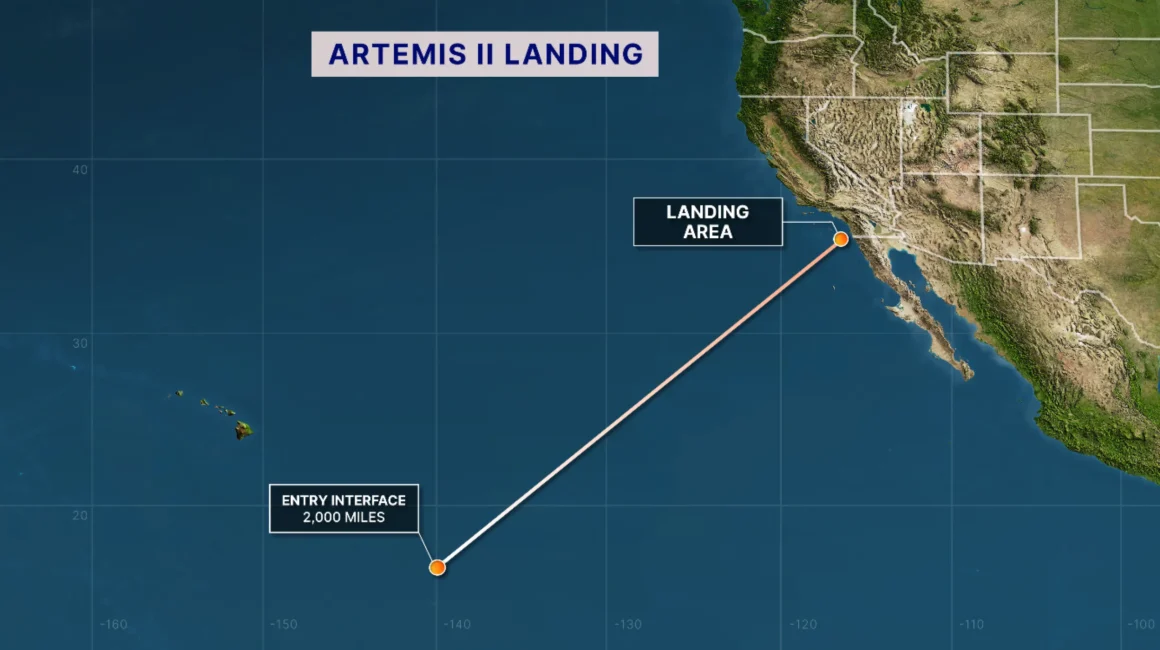
Artemis II already has the images, the distance record, and the emotional pull of a crewed trip around the Moon. Still, the mission’s sharpest test may be happening at the very end. NASA says Orion is scheduled to splash down off the coast of San Diego at about 5:07 p.m. PDT / 8:07 p.m. EDT on Friday, April 10, closing out a roughly 10-day mission around the Moon and back.
The mission stops being symbolic here
A lunar flyby can inspire people on its own. However, Artemis II was never designed as a scenic victory lap. NASA describes it as the first crewed test flight of Orion in deep space, built to evaluate systems, procedures, crew operations, and overall performance before later Artemis missions go further. That is what makes the return phase so important. It turns a beautiful mission into a practical one.
Reentry is the real pressure point
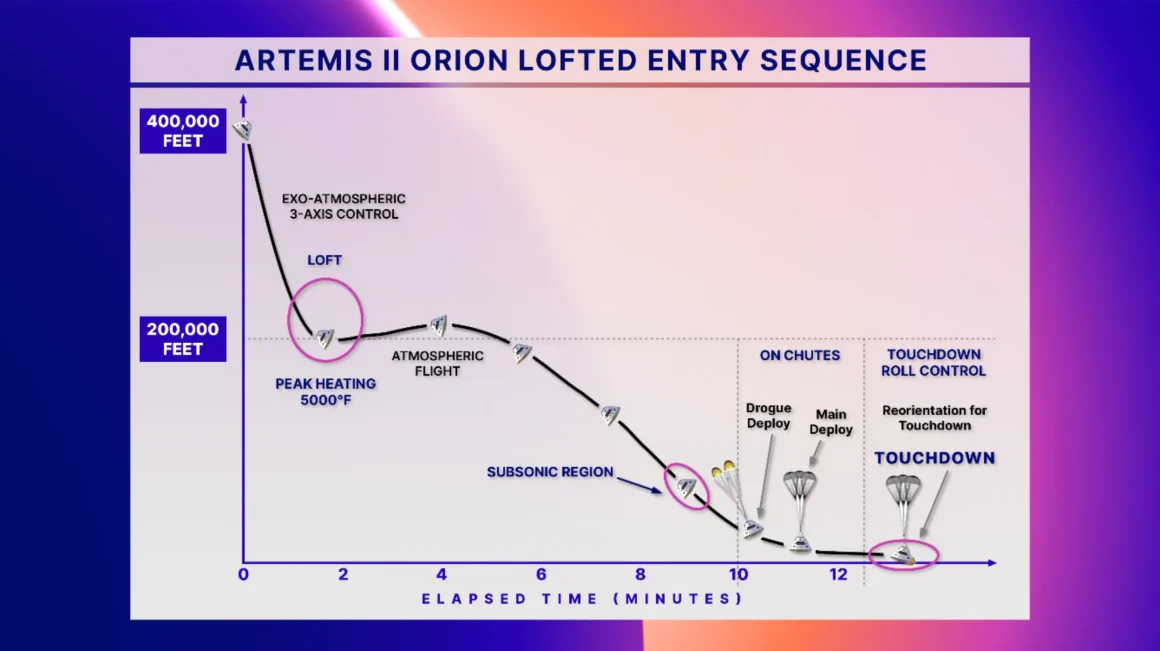
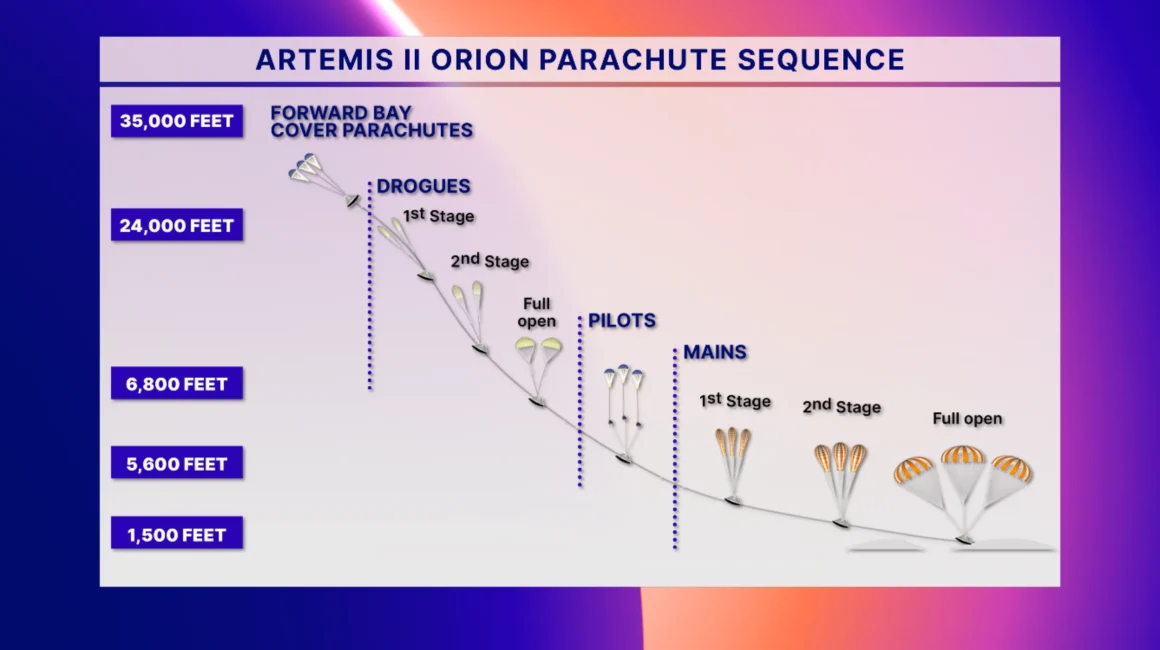
NASA’s Flight Day 9 update lays out a return sequence with almost no room for drift. Just before entry interface, Orion is expected to reach a maximum speed of about 23,864 mph. Soon after, the capsule will enter a planned six-minute communications blackout as plasma builds around it during peak heating. NASA also says the crew may feel up to 3.9 Gs during a nominal landing profile. Then Orion will deploy drogue parachutes near 22,000 feet and its three main parachutes around 6,000 feet before splashdown.
The awe came earlier
The emotional peak of Artemis II did not wait for landing day. During the mission, Orion carried four astronauts around the Moon, pushed farther from Earth than Apollo 13, and returned imagery that made the flight feel intimate as well as historic. That includes NASA’s “Earthset” image, which shows Earth dropping behind the lunar horizon from the far side of the Moon. Those moments gave the mission its heart. The trip home gives it its credibility.
Why the landing matters beyond this week
If Artemis II finishes cleanly, the mission will stand for more than a successful flyby. It will show that NASA can launch a crew beyond low-Earth orbit, operate in deep space, and bring astronauts back through the full entry, descent, and recovery chain. That matters because later Artemis missions aim to build toward sustained lunar exploration, not one-off symbolism. In that sense, Artemis II is not just reviving Moon travel as an image. It is trying to make it operational again.
➡️ Follow Poziwibe Technology for more stories where spaceflight, engineering, and human perspective meet in the same frame.

