
The Batagaika megaslump in Siberia continues to widen each year as thawing permafrost turns frozen ground into unstable terrain.
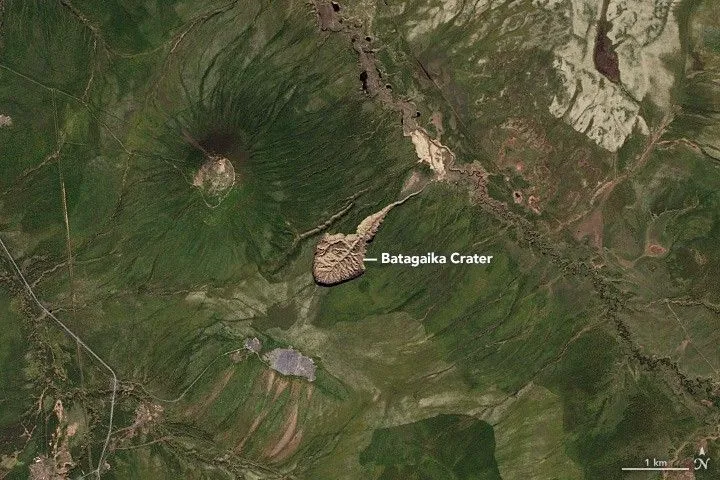
The Batagaika megaslump in Siberia is expanding as permafrost thaws, creating one of the clearest visible ground collapses in the Arctic. Often called the “Gateway to Hell,” the formation is not a crater but a thaw slump driven by rising temperatures.
It keeps growing as frozen layers weaken and the land begins to sink.
What makes this site important is not the nickname, but the fact that it shows frozen ground starting to move.
This is not a crater
The formation began when ice-rich permafrost started to thaw and the ground above it gave way.
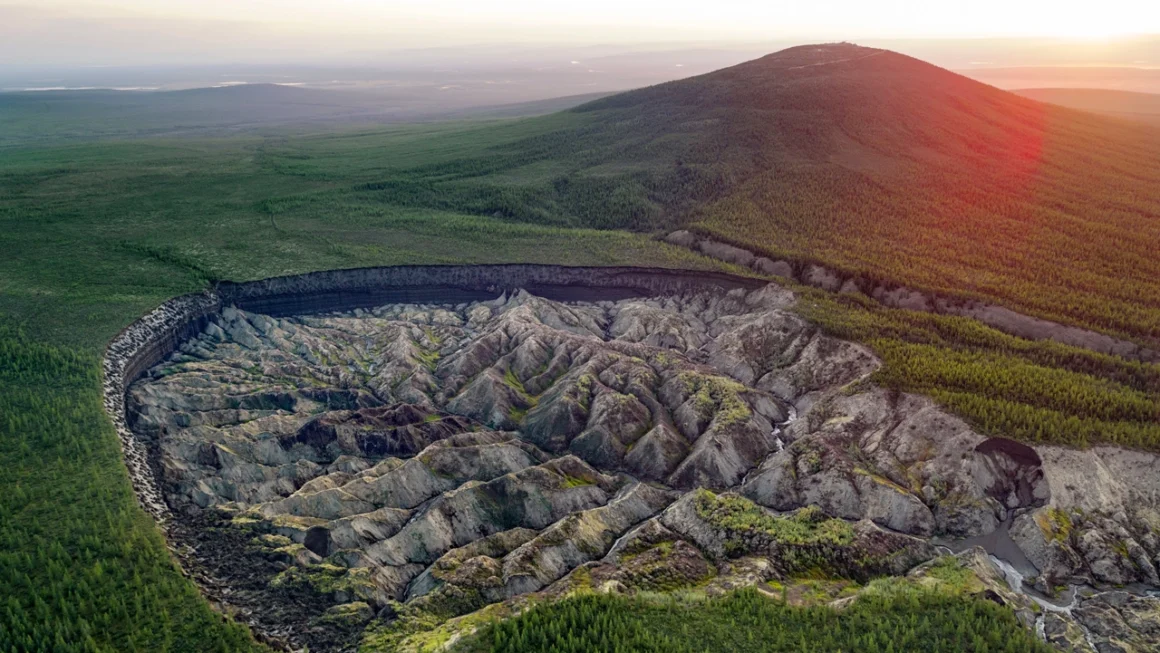
Scientists describe the process as a retrogressive thaw slump, which happens when melting ice weakens the soil and causes it to slide. As more frozen layers become exposed, more thawing follows, and the collapse continues.
That is why the site expands instead of settling.
Why it keeps getting bigger
Permafrost is ground that stays frozen for years, sometimes for thousands of years. Once it starts to thaw, the structure holding the soil together becomes less stable.
At Batagaika, that change is easy to see. Ground that once stayed fixed is now shifting, creating a collapse that returns each season.
This is what makes the formation so striking. It turns a slow environmental process into a visible landscape change.
It is also exposing the past
As the collapse deepens, it reveals layers of soil, plant material, and organic remains that have been frozen for thousands of years.
Researchers use the site to study past climates and ecosystems. That gives it scientific value beyond the visual shock of the landscape itself.
In that sense, Batagaika is not only a collapse site. It is also a record of environmental history being uncovered layer by layer.
Why scientists keep watching it
Permafrost stores large amounts of organic carbon. When it thaws, greenhouse gases such as carbon dioxide and methane can be released into the atmosphere.
That makes this more than a local ground collapse.
The Batagaika megaslump is one visible sign of a larger system changing under pressure.
➡️ If you’re paying attention to how natural systems change when they stop behaving as expected, Nature on Poziwibe keeps those shifts in focus.

