
A landmine-detecting rat helped transform how hidden threats are found, leaving behind a system that continues to make land usable again.

Hero rat Magawa did not look like a solution.
He was small, quiet, and easy to overlook. But in places where the ground itself could not be trusted, that combination became unexpectedly effective.
Working close to the surface, the African giant pouched rat relied on consistency more than anything else. In Cambodia, where land mines still shape daily life in certain regions, that consistency translated into something tangible.
Safer ground, one search at a time.
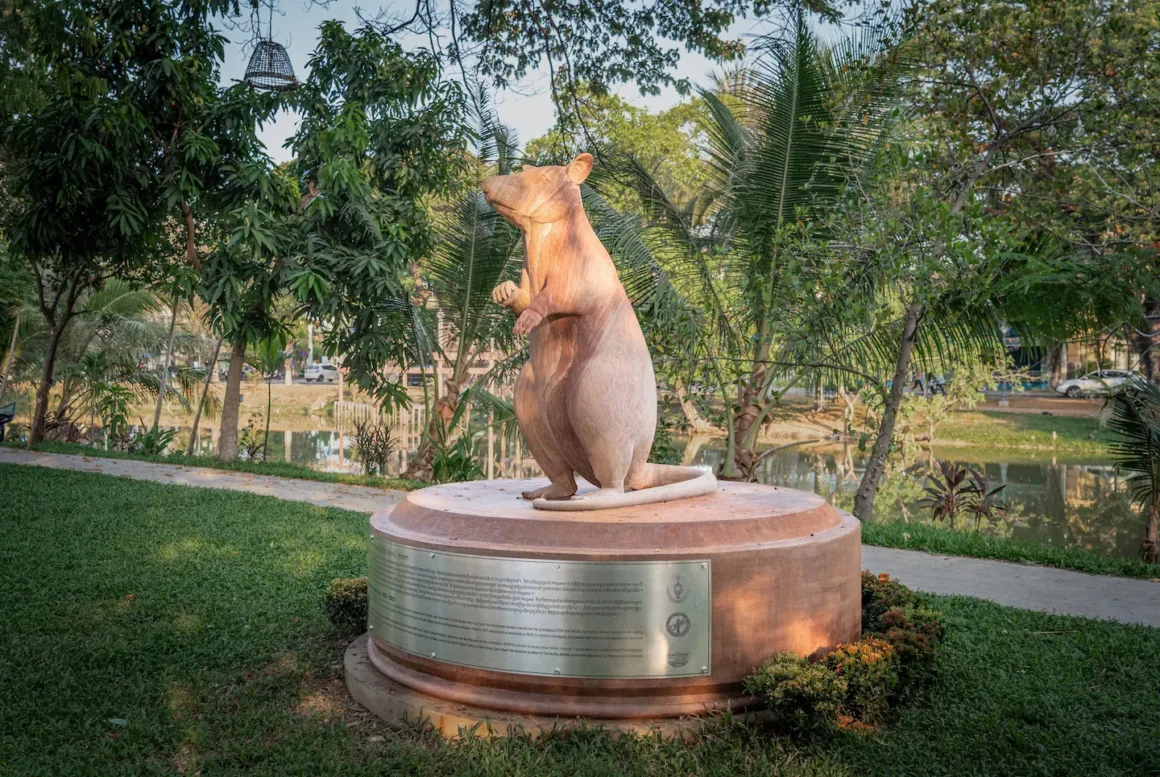
Today, his contribution is remembered through a seven-foot statue unveiled in Cambodia, created to honor his work and bring attention to the country’s ongoing landmine problem.
A System Built for Scale
Magawa was trained as part of a detection system developed by APOPO, a nonprofit that has spent years refining how animals can safely locate explosives. Born in Tanzania in 2013, he was later deployed to Cambodia, where large areas remain affected by unexploded land mines.
Over the course of his career, hero rat Magawa detected more than 100 land mines and helped clear over 1.5 million square feet of land.
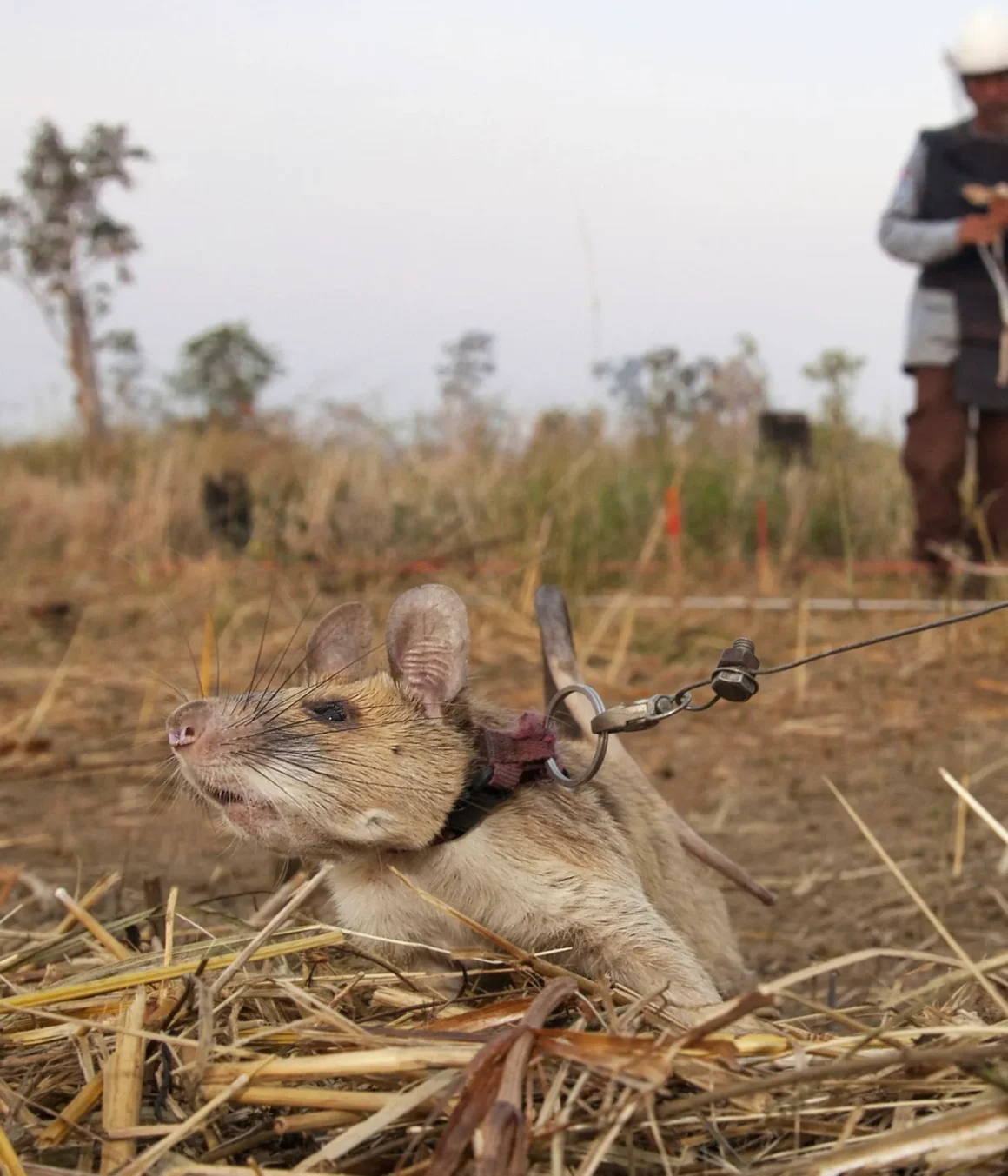
The impact becomes clearer when you look at how the work happens.
A space the size of a tennis court can be scanned in about 20 minutes, while the same process can take human teams several days to complete safely.
That difference allows clearance efforts to move forward at a pace that would otherwise be difficult to sustain.
How Detection Becomes Safer
Magawa’s role was based on identification, not disruption.
He was trained to recognize the chemical signatures of explosives and signal their location by lightly scratching the ground. That signal allowed trained teams to step in with precision instead of uncertainty.
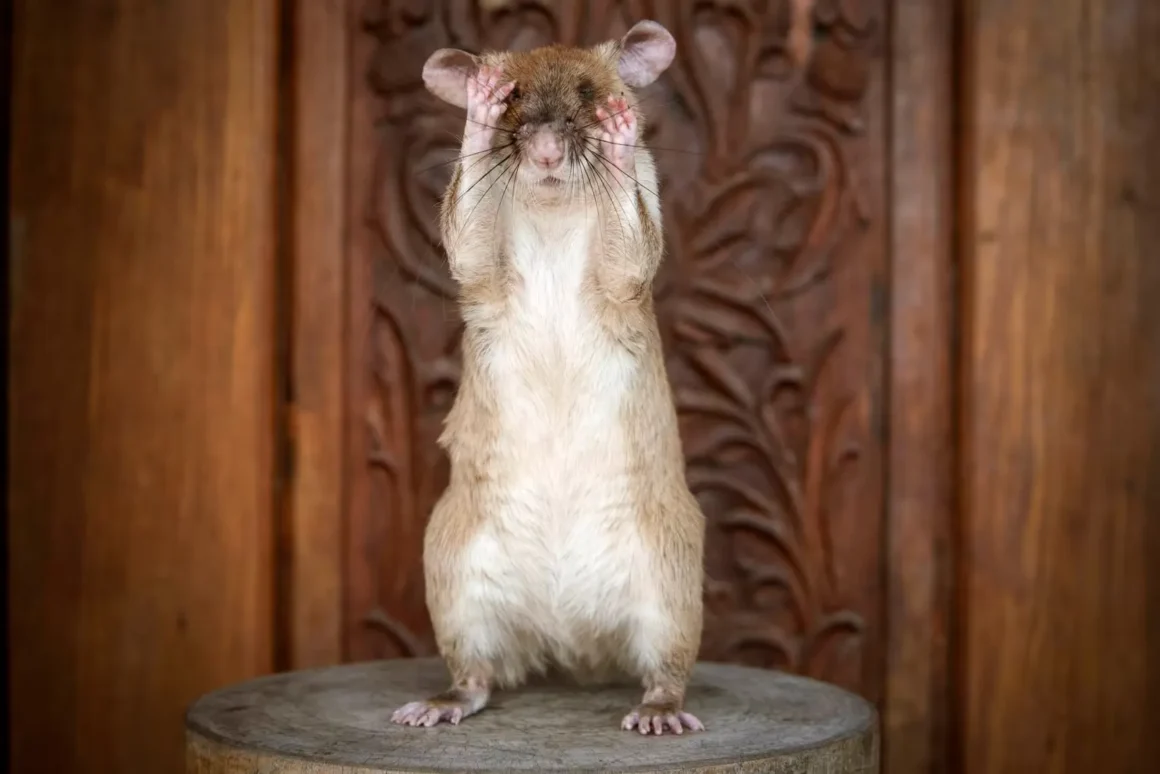
Because of his low body weight, he could move across minefields without triggering them, while his highly sensitive sense of smell ensured reliable detection.
Over time, this approach evolved into a structured workflow that balances speed with safety.
It is now used as part of ongoing clearance operations.
A Landscape Still in Progress
Cambodia’s land mine problem is tied to conflicts from the late 20th century, and its effects are still visible today.
Over the decades, tens of thousands of people have been killed or injured, and millions of mines are believed to remain underground.
Efforts to clear them continue, supported by systems designed to work steadily across large areas.
Progress happens in increments.
But those increments add up.
Hero Rat Magawa’s Recognition and Continuity
In 2020, Magawa became the first rat to receive the PDSA Gold Medal, formally recognizing his role in life-saving detection work.
After retiring, he remained part of the program, helping younger rats adapt to the same routines and environments. The method continues to evolve, with trained rats expanding the reach of detection work.
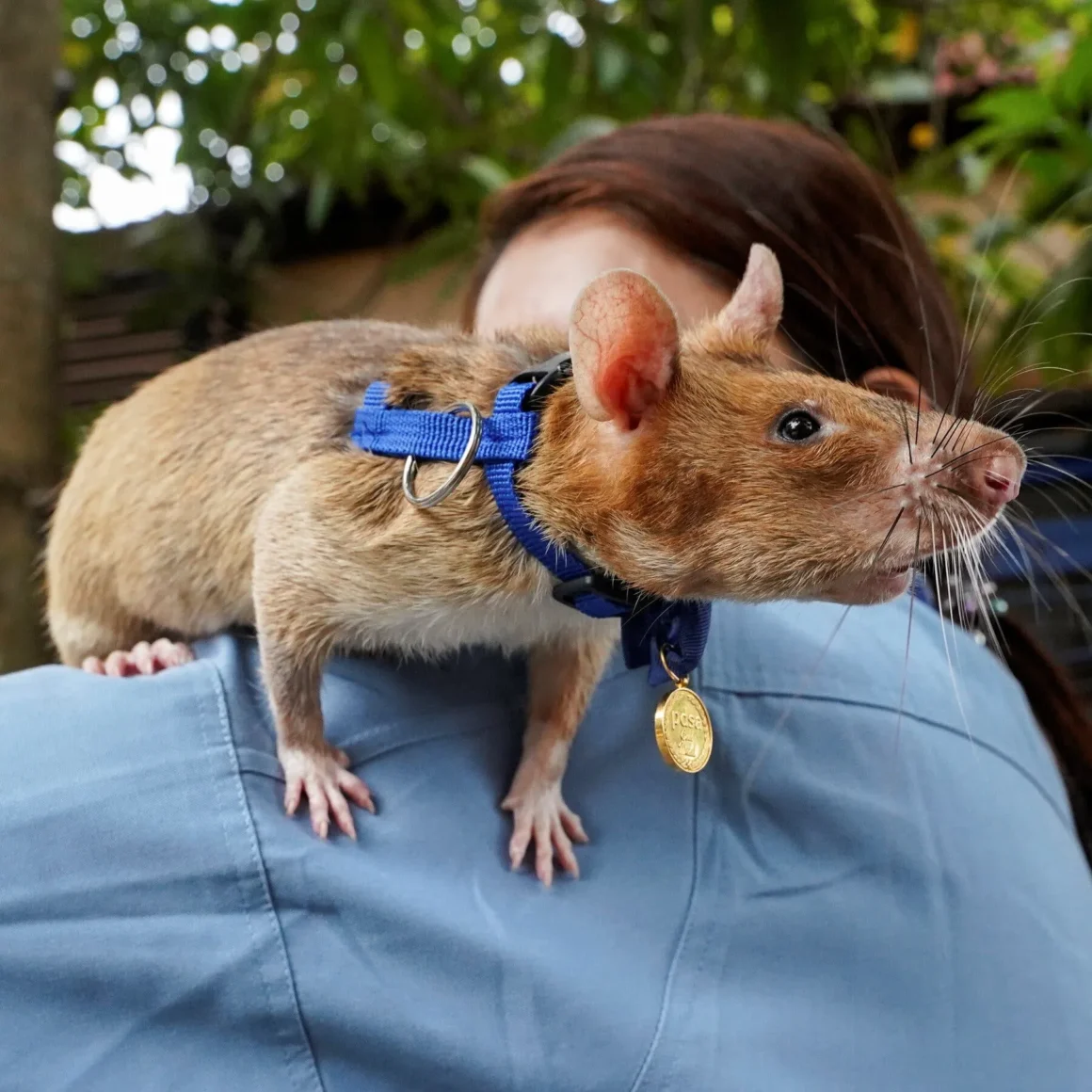
One of his successors has already surpassed his detection record, showing that the system he helped define is still improving.
What Stays With It
What hero rat Magawa left behind is not just a story.
It is a system that continues to work.
A way of finding what cannot be seen. A way of working without increasing risk. And a way of returning land to everyday life, one field at a time.
➡️ Discover more stories that explore how Nature shapes real-world systems in quiet, lasting ways.

