
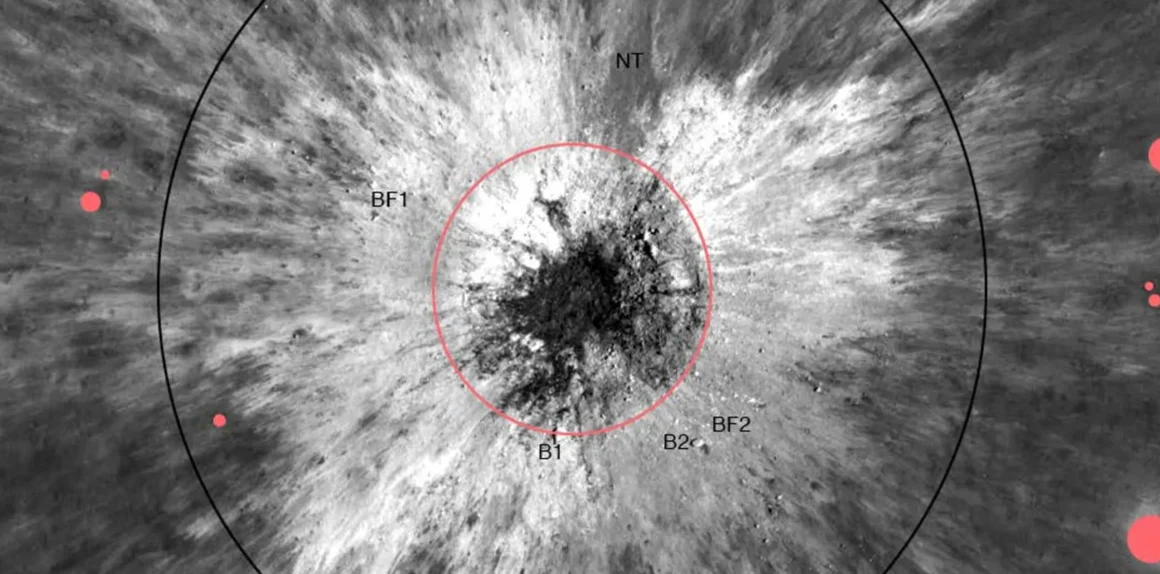
A new crater on the moon is not the kind of event people expect to happen on a human timescale. Yet that is exactly what researchers found in images from NASA’s Lunar Reconnaissance Orbiter: a fresh impact crater about 225 meters wide that appears to have formed in late spring 2024. Based on lunar crater models, an impact that large is expected only about once every 139 years.
That alone makes the discovery remarkable. However, the bigger story is not just that the moon changed. It is that the change happened recently enough for scientists to catch it in before-and-after orbital images. On a world that often feels locked in deep time, this crater makes the lunar surface feel immediate again.
How NASA found the new crater on the moon
Researchers identified the crater during routine temporal analysis of orbiter images. In other words, they compared newer views with older ones and looked for fresh changes. According to the team’s Lunar and Planetary Science Conference abstract, this is the largest crater known to have formed during the LRO mission so far. Before this, the biggest newly formed crater found during the mission measured 70 meters across.
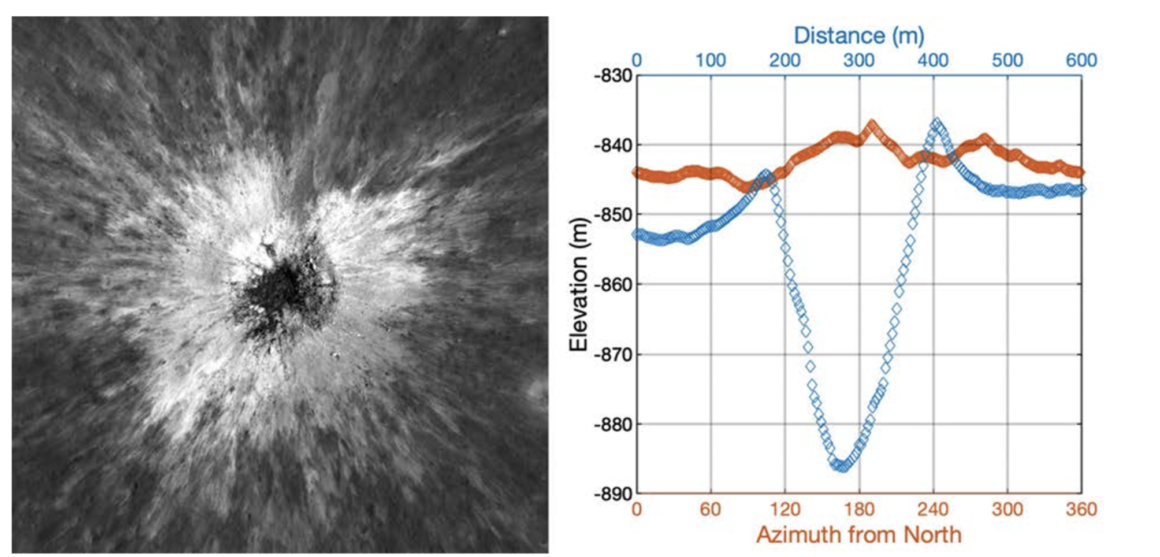
The crater is not just wide. It is also deep, with an average depth of about 43 meters, steep interior walls, and a bright ejecta blanket spread around it. The researchers report that the highest-reflectance ejecta lies mainly within two crater radii of the rim. They also note that the impact did more than carve one hole. Subtle surface changes were visible more than 100 crater diameters away from the impact point.
That detail matters because it changes how the event should be understood. This was not a neat, isolated punch into the lunar ground. It was a wider surface-disturbance event, with debris and reflectance changes extending far beyond the crater itself. As a result, the discovery is not only visually dramatic. It is also operationally important for the future of lunar exploration.
Why the new crater on the moon matters
The moon is often imagined as silent and settled. Still, this discovery points to a tougher reality. Future lunar missions will not be landing on a harmless museum surface. They will be operating in an environment where impacts can throw rock and dust across long distances at dangerous speeds. That risk matters even more because NASA says LRO data helps the agency and its partners choose places where spacecraft and astronauts can land safely, while also supporting longer-term exploration planning.
The finding also fits into NASA’s broader thinking about lunar habitats. In its discussion of the Lunar Safe Haven concept, NASA notes that astronauts on the moon will need protection from micrometeoroids, moonquakes, and radiation. This new crater offers a vivid example of why that kind of planning is not theoretical. A moon base is not just an engineering challenge. It is also a survival challenge.
There is one note of caution. So far, the result has been presented as a conference abstract, not yet as a full peer-reviewed journal paper. Even so, the finding is specific, sourceable, and grounded in imagery from one of NASA’s longest-running lunar missions. That gives the story real weight. More importantly, it offers a rare reminder that the moon is not only ancient. It is still changing.
➡️ Follow Poziwibe Technology for more space stories that reveal how even familiar worlds are still changing.

