
A sealed cave system in New Mexico combines rare mineral formations, unusual depth, and hidden life in a way that makes the underground feel almost unreal.
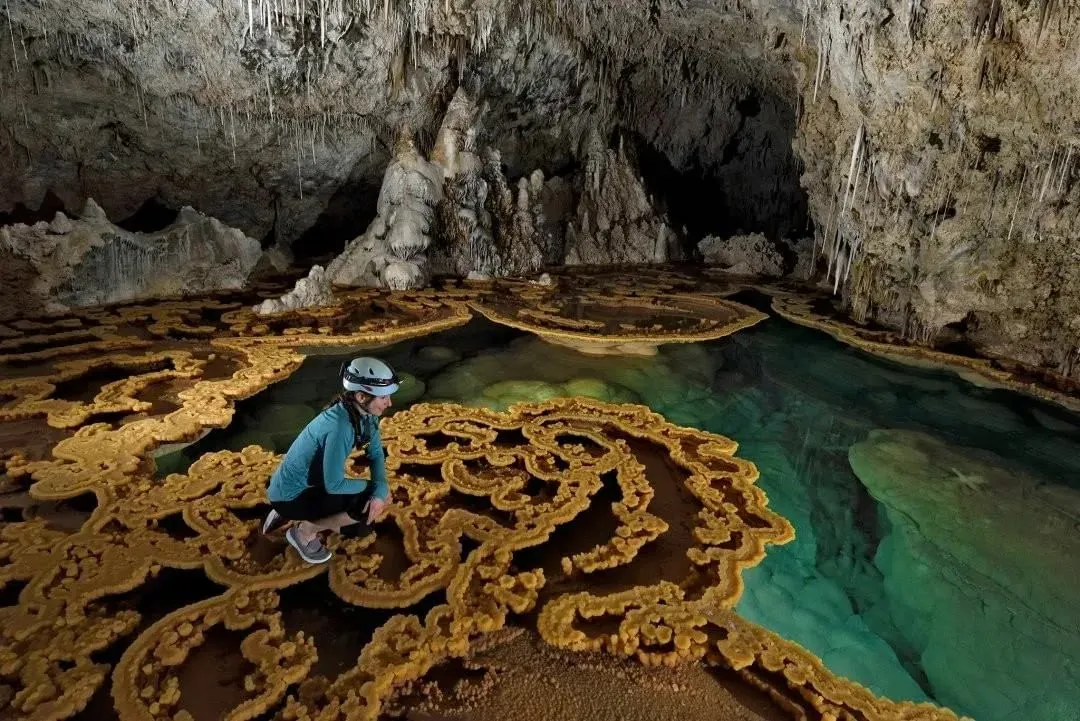
Nature usually feels familiar. Even when it is dramatic, it still follows shapes and systems we think we understand.
This doesn’t.
Deep beneath Carlsbad Caverns National Park in New Mexico, Lechuguilla Cave stretches for more than 145 miles, or about 233 kilometers, and reaches a depth of 1,604 feet, around 489 meters. It is one of the world’s longest caves, and the National Park Service describes it as the second deepest limestone cave in the United States.
Nature, But Unfamiliar
Lechuguilla does not feel like the kind of cave most people imagine. It is known for large decorated passages, fragile formations, and a remarkably pristine underground environment because access is limited to approved research and exploration rather than tourism.
That untouched quality changes the way the cave reads.


It looks natural.
But it does not look ordinary.
Not What a Cave Looks Like
Inside, the cave is filled with formations that make the word “cave” feel too small.
Lechuguilla is especially known for massive gypsum chandeliers, delicate soda straws, and preserved sulfur-related mineral features that feel more sculptural than geological. Some passages hold dense white crystal growth, while walls in other sections carry yellow sulfur textures that make the space look less like carved rock and more like something still in the middle of becoming.
Some chambers are large enough to reset scale entirely. One National Park Service exploration update described a newly found room called Munchkin Land as roughly 600 feet long, 100 to 150 feet wide, and 75 to 150 feet tall.
Nature doesn’t always follow the patterns we expect.
Formed From Below, Not Above
Formed from below, not above.
Most caves are carved gradually from the top down. Water seeps through rock, erodes it over time, and opens space.
Lechuguilla formed differently.
The cave developed largely through sulfuric acid chemistry rather than the more familiar carbonic-acid process. Rising gases and chemically aggressive fluids helped dissolve the limestone from below, which is part of why the cave feels structurally different from the caves people think they know.
It is the same planet. Just not the same logic.
Life Without Sunlight
There is no sunlight here.
And still, life exists.
Researchers have studied microbial communities living deep inside Lechuguilla Cave, including bacteria found in long isolation from the surface. That scientific interest is part of what gives the cave importance beyond its appearance alone.


No sunlight. Still, life exists.
Lechuguilla is also still not an open visitor site, and that distance has helped preserve what makes it so unusual. Its fragility and scientific value have kept much of the cave protected, leaving it far closer to its natural state than most underground spaces people can actually enter.
What This Place Changes
Lechuguilla does more than offer rare formations or impressive numbers.
A cave that runs more than 145 miles underground, drops to 1,604 feet deep, and was shaped by sulfuric acid chemistry instead of the more familiar top-down process is already extraordinary on paper. But what makes it memorable is something else.
It makes Earth look unfamiliar without ever stopping being real.
Familiar does not mean understood.
➡️ Explore more Nature stories that reveal how unexpected the natural world can be.

